

TL;DR:
- Outer ear noise protection, such as earmuffs and earplugs, helps prevent permanent hearing loss in children by reducing sound exposure. Earmuffs are preferred for kids under ten due to their reliable seal and ease of use, while earplugs require proper technique and training. Pairing earmuffs with earplugs provides added protection during extremely loud events like fireworks or racing.
Outer ear noise protection is the use of devices like earmuffs or earplugs to reduce the intensity of harmful sound before it reaches the inner ear. The role of outer ear noise protection is especially critical for children, whose developing auditory systems are more vulnerable to permanent damage. Noise-induced hearing loss (NIHL) is irreversible and can result from sounds exceeding 85 decibels for just one hour or more. Concerts, fireworks displays, and sports stadiums routinely exceed that threshold. Knowing how these devices work and which options fit children best puts parents in a position to act.
How does outer ear noise protection reduce harmful sound?
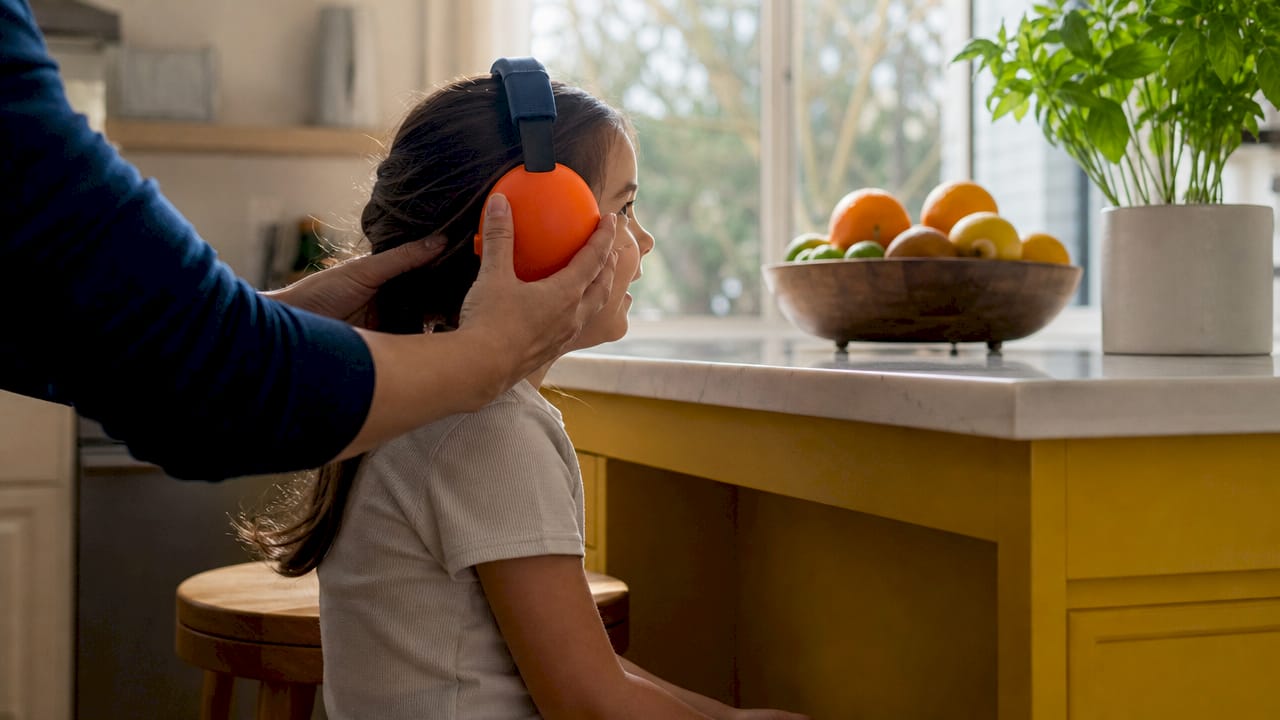
Earmuffs and earplugs work through different physical mechanisms, but both share the same goal: reducing the sound energy that reaches the cochlea. Understanding the difference helps parents choose the right device for the right setting.
Earmuffs cover the entire outer ear with rigid cups lined with acoustic foam. Properly fitted earmuffs reduce ambient noise by approximately 23 dB under ideal conditions. That foam converts sound wave energy into heat, cutting the intensity of harmful noise before it can travel through the ear canal to the eardrum.
Earplugs work differently. They sit inside the ear canal and physically block sound from entering. They can achieve higher maximum attenuation than earmuffs when inserted correctly. The problem is that correct insertion requires training and practice, which makes earplugs less reliable for young children.
Every hearing protection device carries a Noise Reduction Rating (NRR), a standardized number that indicates how many decibels of protection the device provides in a lab setting. Real-world performance is often substantially less than the labeled NRR because fit and user technique vary. An earplug rated NRR 33 may deliver only around 13 dB of real protection if inserted incorrectly. That gap matters enormously when you are at a fireworks show with a toddler.
- Earmuffs: cover the outer ear, easy to put on, consistent seal, NRR typically 22–31 dB
- Earplugs: insert into the ear canal, higher max attenuation, require proper technique
- Dual protection: earmuffs worn over earplugs, adds 10–15 dB more attenuation for extreme noise
Pro Tip: Always check that earmuff cups lie flat against your child’s head with no hair or clothing breaking the seal. A gap as small as a pencil width can cut protection by more than half.
What types of outer ear protection work best for children?
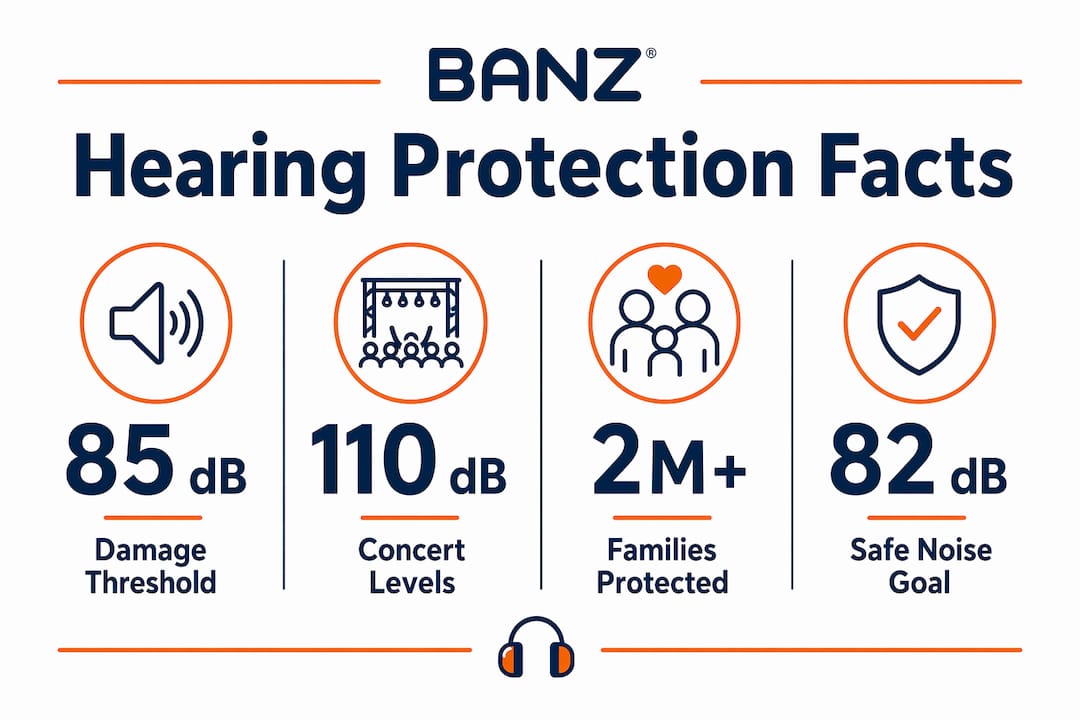
Children need devices sized for smaller heads and shaped for comfort during extended wear. Adult earmuffs slip, lose their seal, and frustrate kids into pulling them off. The right fit keeps protection in place and keeps children willing to wear it.
Earmuffs provide a more consistent and reliable seal for children compared to earplugs, which require training for proper insertion. That consistency is the main reason pediatric audiologists favor earmuffs for children under ten. BANZ designs earmuffs specifically for infants and toddlers, with adjustable headbands and cushioned cups sized for small heads.
For children with sensory processing differences, standard earmuffs can feel overwhelming. Specialized sensory earmuffs for kids use softer cup padding and lighter clamping pressure to reduce the physical sensation of wearing them. These options also help children with autism or sensory processing disorder (SPD) tolerate protection at loud events without distress.
| Protection type | Best for | Key advantage | Key limitation |
|---|---|---|---|
| Children’s earmuffs | Ages 0–10, all loud events | Easy to fit, consistent seal | Bulkier than earplugs |
| Foam earplugs | Older children with training | High max attenuation | Requires correct insertion technique |
| Dual protection | Fireworks, motorsports, firearms | 10–15 dB extra attenuation | Less practical for casual events |
| Sensory earmuffs | Children with SPD or autism | Softer pressure, speech clarity | Slightly lower NRR than standard cups |
For most parents at a concert or sports event, children’s earmuffs are the practical first choice. Dual protection becomes relevant at events with impulse noise, such as fireworks or motorsport racing, where dual protection adds 10–15 dB more attenuation than a single device alone. Pairing earmuffs with earplugs at those events gives children a meaningful safety margin. You can also pair hearing protection with other outdoor safety gear. Parents who already use kids’ sun hats at outdoor events will find it straightforward to add earmuffs to the routine.
What are the health impacts of loud noise on children’s ears?
Loud noise damages hearing by destroying the outer hair cells inside the cochlea. These cells convert sound vibrations into electrical signals the brain reads as sound. Once they are gone, they do not grow back. That is what makes noise-induced hearing loss permanent.
“Children’s ears are not simply smaller versions of adult ears. Their auditory systems are still developing, which means repeated noise exposure during childhood can alter the trajectory of hearing health for life. Protecting hearing early is not optional. It is foundational.”
Exposure to sounds above 85 dB for more than one hour is enough to begin this damage. A typical rock concert reaches 110–120 dB. A fireworks display can peak above 140 dB at close range. Even a loud sports stadium regularly sits at 90–100 dB. Children at these events without protection face real risk with every visit.
Tinnitus, the persistent ringing or buzzing in the ears, is another documented consequence of noise overexposure. Children who develop tinnitus often struggle to describe it, which means the condition goes unrecognized for years. Consistent use of hearing protection prevents both tinnitus and the gradual threshold shifts that precede full hearing loss.
Consistent, full-day use of hearing protection over years significantly reduces hearing loss progression, with measurable benefits appearing after three years of regular use. Starting that habit in childhood, when the auditory system is still developing, compounds those benefits over a lifetime.
How should parents select and fit ear protection for children?
Choosing the right device is only half the task. Getting children to wear it correctly and consistently is the other half. These steps cover both.
- Measure and size correctly. Check the manufacturer’s age and head circumference guidelines before buying. Children’s earmuffs labeled for “infants” and those labeled for “toddlers” differ in cup size and headband tension.
- Test the seal before the event. Place the earmuffs on your child’s head and press gently on the cups. If you hear a noticeable reduction in ambient sound yourself when you press, the seal is working.
- Introduce earmuffs at home first. Let children wear them during a familiar activity like watching a video. This builds tolerance before the stress of a loud event.
- For sensory-sensitive children, go slow. Start with one minute of wear, then two, then five. The BANZ guide on introducing earmuffs to sensitive children outlines a practical step-by-step acclimation process.
- Check fit every 20–30 minutes during the event. Children move, and earmuffs shift. A quick check keeps the seal intact.
Good hearing protection balances damage prevention with situational awareness, which means children should still be able to hear a parent’s voice and respond to their environment. Devices that block all sound create anxiety and reduce the chance a child will keep them on.
Over-protection can isolate children, making them uncomfortable and reducing consistent use. The goal is to bring noise down to a safe level below 85 dB, not to silence the world entirely.
Pro Tip: Choose earmuffs with an NRR that brings the event’s peak noise level below 82 dB rather than the highest NRR available. This keeps your child protected and still able to communicate with you during the event.
Key Takeaways
The outer ear is the first line of defense against noise damage, and fitting children with properly sized earmuffs before a loud event is the single most effective step parents can take.
| Point | Details |
|---|---|
| 85 dB is the damage threshold | Sounds above 85 dB for more than one hour begin destroying cochlear hair cells permanently. |
| Earmuffs suit children best | Earmuffs provide a consistent seal without the insertion technique that earplugs require. |
| NRR gap is real | Real-world protection is often half the labeled NRR; correct fit closes that gap significantly. |
| Dual protection for extreme noise | Pairing earmuffs with earplugs adds 10–15 dB at fireworks or motorsport events. |
| Consistent use compounds benefits | Long-term regular use measurably slows hearing loss progression, starting from childhood. |
Why I think parents underestimate the timing problem
Most parents know loud noise is bad for kids. What they miss is the timing. They plan to put earmuffs on before the fireworks start, but the show begins early, or the crowd noise spikes unexpectedly, and the window closes. By the time the earmuffs go on, the damage window has already opened.
I have seen this pattern repeat at every kind of loud event. The earmuffs are in the bag. The intention is there. But the moment of peak noise arrives before the device does. The fix is simple: earmuffs go on before you enter the venue, not after the noise starts. Treat them like a seatbelt. You buckle up before the car moves, not after the first bump.
The other thing I have learned is that children who wear earmuffs from infancy treat them as normal. They do not resist them. The resistance comes when earmuffs are introduced at age four or five during a stressful, loud event. Acclimation at home, during calm moments, removes that resistance entirely. Earmuff benefits at concerts are only real if the child is actually wearing them when the music starts.
The best hearing protection is the type that is actually worn. A device sitting in a bag has an NRR of zero.
— Shari M. Murphy
Trusted hearing protection for children from BANZ
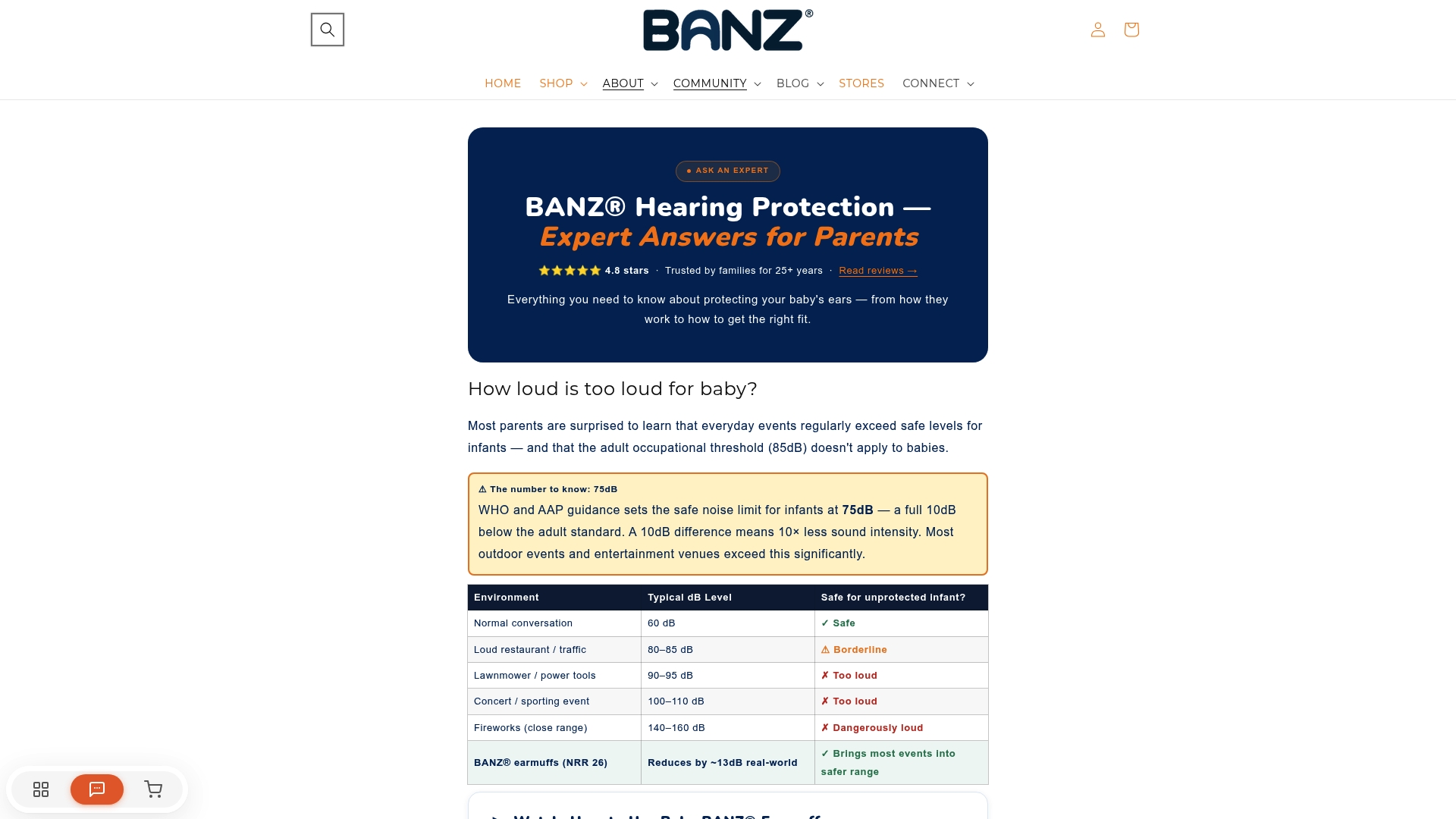
BANZ has protected children’s hearing across more than 2 million families on six continents. Every product is designed with children’s sizing, comfort, and real-world use in mind, not adapted from adult gear.
Parents looking for the right starting point can review BANZ’s baby earmuffs NRR guide to understand which noise reduction rating fits their child’s age and the events they attend. For children with sensory sensitivities, the sensory earmuffs collection offers softer, lower-pressure options that maintain protection without discomfort. The free BANZ Protect app adds real-time noise monitoring so parents can check whether the environment their child is in actually requires protection before putting the earmuffs on.
FAQ
What is the role of outer ear noise protection?
Outer ear noise protection reduces the intensity of harmful sound before it reaches the inner ear and cochlea. Devices like earmuffs and earplugs achieve this by blocking or absorbing sound waves at the outer ear.
At what noise level do children need ear protection?
Children need hearing protection at any sustained noise level above 85 dB, which includes concerts, fireworks, and loud sports events. Exposure above that threshold for more than one hour begins causing permanent cochlear damage.
Are earmuffs or earplugs better for young children?
Earmuffs are the better choice for young children because they provide a consistent seal without requiring the insertion technique that earplugs demand. Children under ten typically cannot insert earplugs correctly enough to achieve reliable protection.
How do I know if my child’s earmuffs fit correctly?
The earmuff cups should lie flat against the head with no hair, clothing, or straps breaking the seal. Press gently on the cups during wear; if your child reports a noticeable drop in sound, the seal is working.
Can children wear earmuffs and earplugs at the same time?
Yes. Dual protection combines both devices and adds 10–15 dB of extra attenuation beyond a single device. This combination is recommended for very loud impulse noise environments like fireworks displays or motorsport events.
Recommended
- Free Kids Hearing Safety Resources: NIH Noisy Planet Downloads + BANZ Family Guide – BANZ® Carewear USA
- Earmuff Provision at Family Events: A Parent’s Guide – BANZ® Carewear USA
- Noise Safety for Children: Everyday Sounds Parents Should Watch |BANZ® – BANZ® Carewear USA
- Ear Protection in Indoor Entertainment: A Parent’s Guide – BANZ® Carewear USA