

TL;DR:
- Children face higher risks from sun exposure due to their skin’s structural vulnerability and early DNA damage. Protecting kids involves applying broad-spectrum SPF 30+ sunscreen properly, dressing them in UPF clothing, and seeking shade during peak UV hours. Consistent, layered protection helps reduce lifetime skin cancer risks effectively.
Sun exposure during childhood causes cumulative DNA damage that raises your child’s lifetime risk of skin cancer and premature aging. Start protection now with three steps:
- Apply broad-spectrum SPF 30+ sunscreen 20–30 minutes before going outside
- Cover your child with UPF-rated clothing, a wide-brim hat, and UV-blocking sunglasses
- Stay in shade during peak UV hours (10 AM–4 PM) and monitor the UV index before outings
Key stat: Full-body coverage for an average child requires approximately seven teaspoons of sunscreen (about one teaspoon per major body area). Most parents apply far less.
Table of Contents
- What are the real sun damage risks for young skin?
- What sunscreen rules actually protect your child?
- How do clothing, shade, and timing reduce UV dose?
- Do medications make your child more sun-sensitive?
- Your pre-outing checklist and UV monitoring tools
- When should you call a doctor for a sunburn?
- Key Takeaways
- What actually works when sun protection becomes a daily habit
- BANZ gear for layered sun protection
- Useful sources
What are the real sun damage risks for young skin?
Children’s skin is not just smaller adult skin. Research published in a peer-reviewed UV review shows that melanocytic stem cells in children’s vellus hair follicles sit closer to the skin surface than in adults, meaning the same UV dose delivers more DNA damage to the cells that can later become melanoma. That structural difference is one reason childhood is considered a uniquely vulnerable window for UV harm.
UV rays come in two forms that matter here. UVA penetrates deep into the skin and drives long-term aging and DNA mutation. UVB causes the visible burn. Both damage DNA, and both are present even on overcast days.
A bad sunburn in childhood or adolescence doubles the risk of melanoma later in life. Epidemiological migration studies reinforce this: children who moved from low-UV to high-UV countries before age 10–15 carried nearly the same elevated cancer risk as those born in high-UV regions, confirming that early childhood UV exposure sets a long-term risk trajectory.
Long-term consequences parents should know:
- Cumulative DNA damage that compounds with every unprotected outing
- Increased melanocytic nevi (moles), a known melanoma risk factor
- Premature photoaging, including fine wrinkling visible as early as the early teens in high-UV environments
- Eye damage, including elevated cataract risk from UV exposure
- Higher lifetime skin cancer risk for all three major types: melanoma, basal cell carcinoma, and squamous cell carcinoma
One more thing: a tan is not a sign of health. Dermatologists are clear that tanning is a direct sign of skin damage. There is no such thing as a safe tan, and treating a tan as protective is a common mistake that leads to longer, riskier exposure.
Pro Tip: If your child comes home with a “base tan” from a week at the beach, that color is evidence of injury, not protection. Treat it the same way you would a mild burn: moisturize, avoid further exposure, and apply sunscreen more carefully next time.
What sunscreen rules actually protect your child?
Buying the right sunscreen is step one. Applying it correctly is where most parents fall short.
What to buy: Choose a broad-spectrum, water-resistant sunscreen with SPF 30 or higher. Broad-spectrum means it blocks both UVA and UVB. SPF 30 blocks about 97% of UVB rays; higher SPFs offer marginally more protection but no formula blocks 100%. Mineral formulas (zinc oxide, titanium dioxide) sit on top of the skin and are a good choice for sensitive skin. Chemical formulas absorb UV but may irritate younger or more reactive skin. For babies under 6 months, keep them out of direct sunlight as much as possible; if shade and clothing are not available, sunscreen may be used on small exposed areas after consulting your physician.
How much to use: Most parents under-apply significantly. The Royal Children’s Hospital guidance puts full-body coverage at approximately seven teaspoons for an average child. That is roughly one teaspoon per major body area.
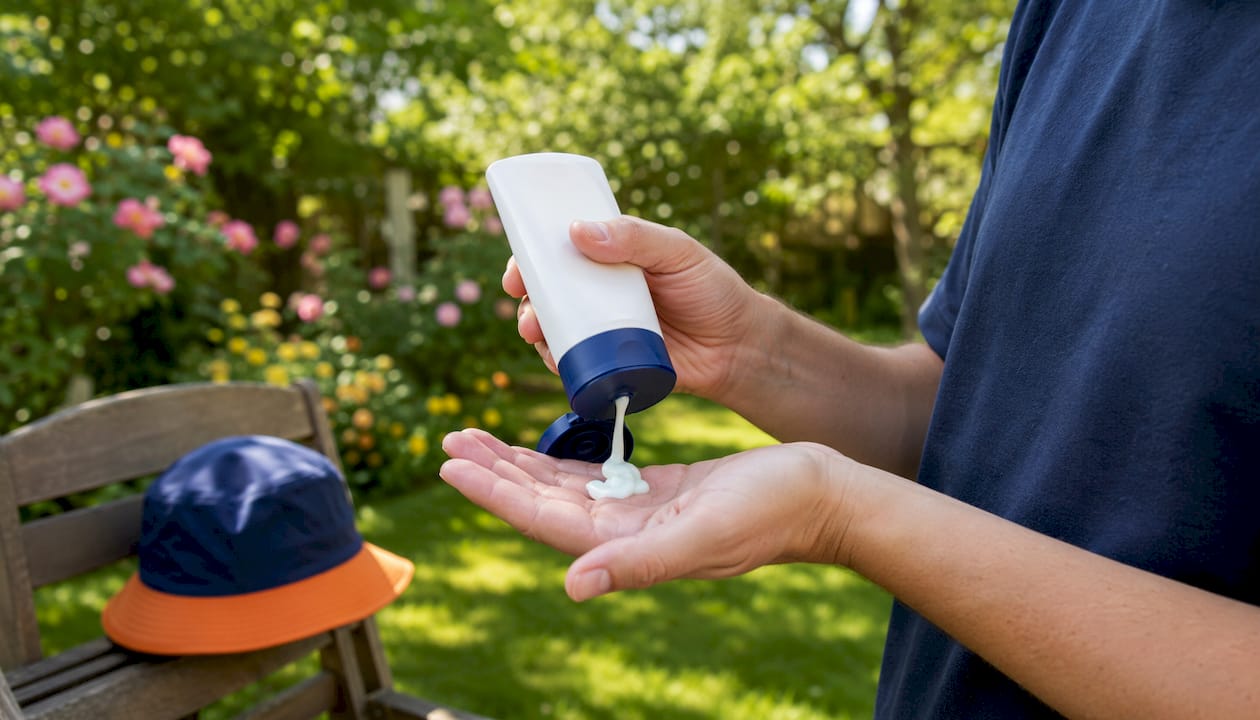
How to apply it: Apply 20–30 minutes before going outside so the formula has time to bind to the skin. Avoid aerosol sprays; they make it difficult to achieve even, adequate coverage. Creams and lotions are the better choice for measurable application.
| Rule | Guidance |
|---|---|
| SPF minimum | SPF 30+ broad-spectrum |
| Amount for full body | approximately seven teaspoons for an average child (roughly one teaspoon per major body area) |
| Apply before exposure | 20–30 minutes before going outside |
| Reapply interval | Every 2 hours |
| After water or sweating | Reapply immediately |
| Water-resistance label | 40 or 80 minutes (not “waterproof”) |
| Babies under 6 months | Avoid sunscreen; use shade and clothing first |
Note on water-resistance: sunscreen labels cannot legally claim “waterproof” in the US. Labels must specify 40- or 80-minute water-resistance windows. After that window, reapply regardless of how dry your child looks.
Reapply every 2 hours or immediately after swimming or heavy sweating. A single morning application does not last a full day outdoors.
How do clothing, shade, and timing reduce UV dose?
Sunscreen alone is not enough. Pediatric safety guidance from UCSF Benioff Children’s Hospitals is direct: sunscreen is a supplement, not the only defense. Clothing, shade, and smart timing reduce the UV dose your child receives before sunscreen even enters the picture.
Clothing and accessories:
- UPF 50+ rated garments block 98% of UV rays and are the most reliable fabric protection available. Check out UPF 50 protection for kids for guidance on ratings and laundering care.
- Long-sleeve rash guards are practical for water play and beach days
- Wide-brim hats (minimum 3-inch brim) protect the face, ears, and neck
- Sunglasses with UVA/UVB protection shield the eyes and the delicate skin around them; BANZ offers UV eye protection resources for parents and providers
Shade strategy:
- Position pop-up shades and umbrellas to block overhead and angled sun
- Tree shade reduces UV but does not eliminate it; surfaces nearby still reflect UV
- Water, sand, and concrete all reflect UV rays, increasing your child’s exposure even when they are sitting under an umbrella
Timing:
- Avoid outdoor activities between 10 AM and 4 PM when UV index peaks
- Check the UV index before heading out; a reading of 3 or above warrants full protection measures
Pro Tip: Layer protection in this order: UPF clothing and a hat first, shade second, then sunscreen on all exposed areas. Each layer reduces the UV dose independently, so a gap in one layer does not leave your child unprotected.
Do medications make your child more sun-sensitive?
Some children need extra precautions beyond the standard SPF routine. Certain medications significantly increase sun sensitivity, meaning a child can burn faster and more severely than usual.
Common medication classes that can cause photosensitivity include certain antibiotics (such as tetracyclines), acne treatments like isotretinoin, some antihistamines, and certain diuretics. This is not an exhaustive list. If your child takes any prescription or over-the-counter medication regularly, consult a pharmacist or pediatrician before prolonged sun exposure to check for photosensitivity warnings.
Children who need extra attention regardless of medications:
- Very fair-skinned children or those with red or light hair
- Children with a high number of moles (nevi)
- Children with a family history of melanoma
- Infants under 6 months old
Pro Tip: Check the medication insert or the pharmacy label for a “photosensitivity” or “avoid sun exposure” warning. If you do not see one but are unsure, ask the pharmacist directly at pickup. It takes 30 seconds and can prevent a serious burn.
Your pre-outing checklist and UV monitoring tools
A short, repeatable routine is the most practical way to protect your child consistently.
- Apply broad-spectrum SPF 30+ sunscreen 20–30 minutes before leaving
- Dress your child in UPF-rated clothing, a wide-brim hat, and UV-blocking sunglasses
- Check the UV index using a weather app or a dedicated UV monitor
- Set a phone alarm to reapply sunscreen every 2 hours
- Set up shade (umbrella, pop-up tent, or tree cover) at your destination
- Pack a spare sunscreen tube, a change of clothing, and a small first-aid kit for minor burns
For UV monitoring, the EPA’s free UV Index tool and weather apps like Weather.com display real-time UV readings by zip code. The free BANZ Protect app goes further, offering real-time UV and noise monitoring so you can make informed decisions about when to move your child into shade or wrap up outdoor play. A caregiver checklist for sun safety products is also available from BANZ for a quick pre-outing reference.
Pro Tip: Label your sunscreen tube with the time you opened it and the date of first use. Sunscreen degrades over time, and an expired or heat-damaged formula may not deliver its rated SPF.
When should you call a doctor for a sunburn?
Most sunburns in children are first-degree burns that heal at home with cool water, moisturizer, and rest. Some require medical attention.
| Sign | Severity | Action |
|---|---|---|
| Redness, mild pain, no blisters | Minor (first-degree) | Cool compresses, aloe vera, hydration, keep out of sun |
| Blisters, moderate-to-severe pain | Moderate (second-degree) | Call pediatrician same day |
| Blisters covering a large area | Severe | Go to urgent care or ER |
| Fever, chills, headache | Systemic (sun poisoning) | Go to ER immediately |
| Dehydration: no urination, dry mouth, dizziness | Systemic | Go to ER immediately |
| Signs of infection: pus, increasing redness, warmth | Infected burn | Call pediatrician or urgent care |
Do not pop blisters. Broken blisters increase infection risk. If your child develops a fever, stops urinating, or becomes confused after sun exposure, treat it as an emergency.
Key Takeaways
Young skin is structurally more vulnerable to UV damage than adult skin, and every unprotected outing adds to a cumulative risk that raises lifetime skin cancer rates.
| Point | Details |
|---|---|
| Childhood sunburns raise lifetime risk | A bad sunburn in childhood or adolescence doubles the risk of melanoma later in life. |
| Apply the right amount | Full-body coverage for an average child requires approximately seven teaspoons of sunscreen (roughly one teaspoon per major body area). |
| Reapply on schedule | Reapply every 2 hours and immediately after swimming or sweating, regardless of the water-resistance label. |
| Layer all three defenses | UPF clothing, shade, and sunscreen together reduce UV dose more effectively than any single measure alone. |
| BANZ Protect app | Use the free BANZ Protect app to monitor real-time UV levels and decide when to move your child into shade. |
What actually works when sun protection becomes a daily habit
The science on UV risk in children is settled. What is less discussed is the gap between knowing the rules and actually following them every single outing, in every season, for years.
The parents who get this right tend to treat sun protection the same way they treat car seat use: non-negotiable, automatic, and built into the routine before they leave the house. The ones who struggle treat it as a beach-day task. The problem is that UV exposure happens at the park, at school recess, during a 20-minute walk, and on overcast days when up to 80% of UV rays still reach the skin.
One habit worth adding today: put sunscreen next to your child’s shoes. If it is in the same place as something they already put on before going outside, the application rate goes up without any extra effort. For older kids, let them apply it themselves with your oversight. Children who participate in the routine are more likely to carry it into their teen years, when sunburn prevalence among US high school students remains persistently high. Teaching the habit early is the most durable protection you can give them.
BANZ gear for layered sun protection
BANZ® was built by parents who could not find adequate protection gear for their own children. Today, BANZ products combine UPF 50+ sun protection with rated noise-reduction earmuffs, covering two outdoor safety needs in one. Over 2 million families across six continents use BANZ gear for beach days, sports events, and everyday outdoor play.
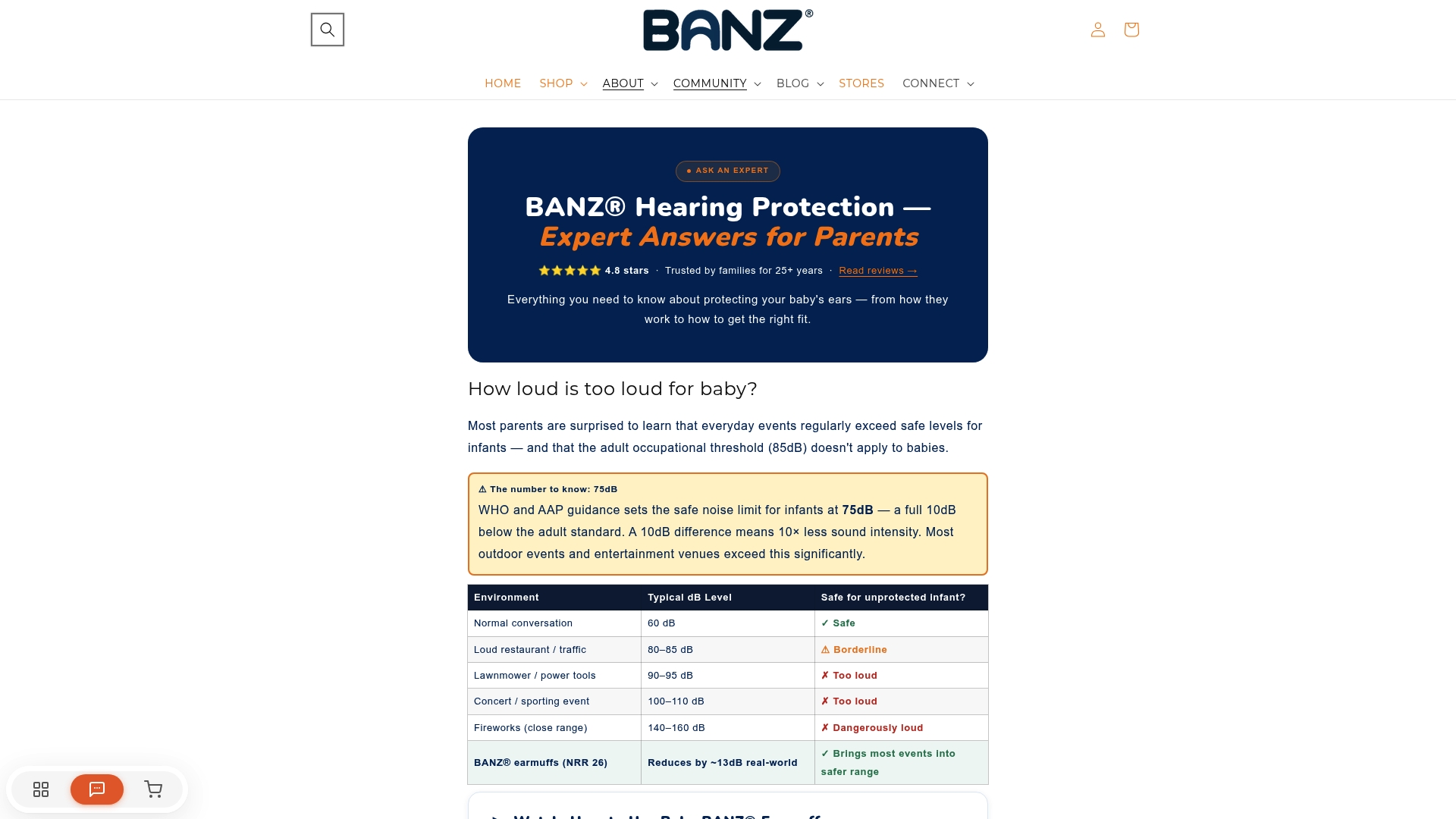
The free BANZ Protect app adds real-time UV and noise monitoring so you can track conditions at your exact location, not just a regional forecast. For a full set of parent-facing resources, including CDC, EPA, and WHO sun-safety guides curated in one place, visit the BANZ kids’ sun safety resource library. To see why parents trust BANZ for UV eye protection and outdoor gear, check the BANZ UV safety resources page for UV index guidance and product options.
This article is general information, not medical advice. Confirm current sun-safety guidelines and any medication-specific precautions with your child’s pediatrician or pharmacist.
Useful sources
- Sun Safety | CDC — CDC overview of UV risks, skin cancer prevention, and school-based sun-safety strategies
- Sun Safety for Children — HealthyChildren.org (AAP) — American Academy of Pediatrics guidance on sunscreen, clothing, and infant sun safety
- Sun Safety for Children and Babies — UCSF Benioff Children’s Hospitals — Practical pediatric guidance including the melanoma-doubling statistic and water-resistance labeling rules
- Sun Safety — KidsHealth (Nemours) — Parent-facing guidance on tanning myths and photosensitizing medications
- Staying Safe in the Sun — Royal Children’s Hospital (RCH) — Clinical guidance on SPF, reapplication timing, and the seven-teaspoon application rule
- Childhood Exposure to UV Radiation — ScienceDirect (peer-reviewed review) — Epidemiological evidence on migration studies and children’s structural skin vulnerability
- Sunburn Prevalence Among US High School Students, YRBS 2023 — CDC — National data on adolescent sunburn rates and prevention priorities
Consult your child’s pediatrician for medication-specific photosensitivity advice. Use the EPA UV Index tool or the BANZ Protect app for real-time UV monitoring at your location.
