

Sun safety awareness activities for kids are interactive lessons and games designed to teach children how to protect themselves from harmful ultraviolet (UV) rays. Children account for 25% of lifelong sun exposure, which means the habits formed before adulthood carry real consequences for lifetime skin cancer risk. Blistering sunburns during childhood raise melanoma risk significantly. The good news is that kids who learn sun protection through play and hands-on activities are far more likely to carry those habits into adulthood. This guide gives parents and caregivers a practical set of activities that combine fun with genuine behavioral change.
What are effective sun safety awareness activities for kids?
The most effective sun protection activities for children go beyond telling kids to “put on sunscreen.” They build habits by making UV safety feel like a normal, even enjoyable, part of going outside. The Slip, Slop, Slap, Seek, Slide framework, developed and piloted by the Melanoma Fund, gives every activity a clear behavioral anchor. Each word maps to a specific action: slip on a shirt, slop on sunscreen, slap on a hat, seek shade, and slide on sunglasses.
1. Sunscreen application practice sessions
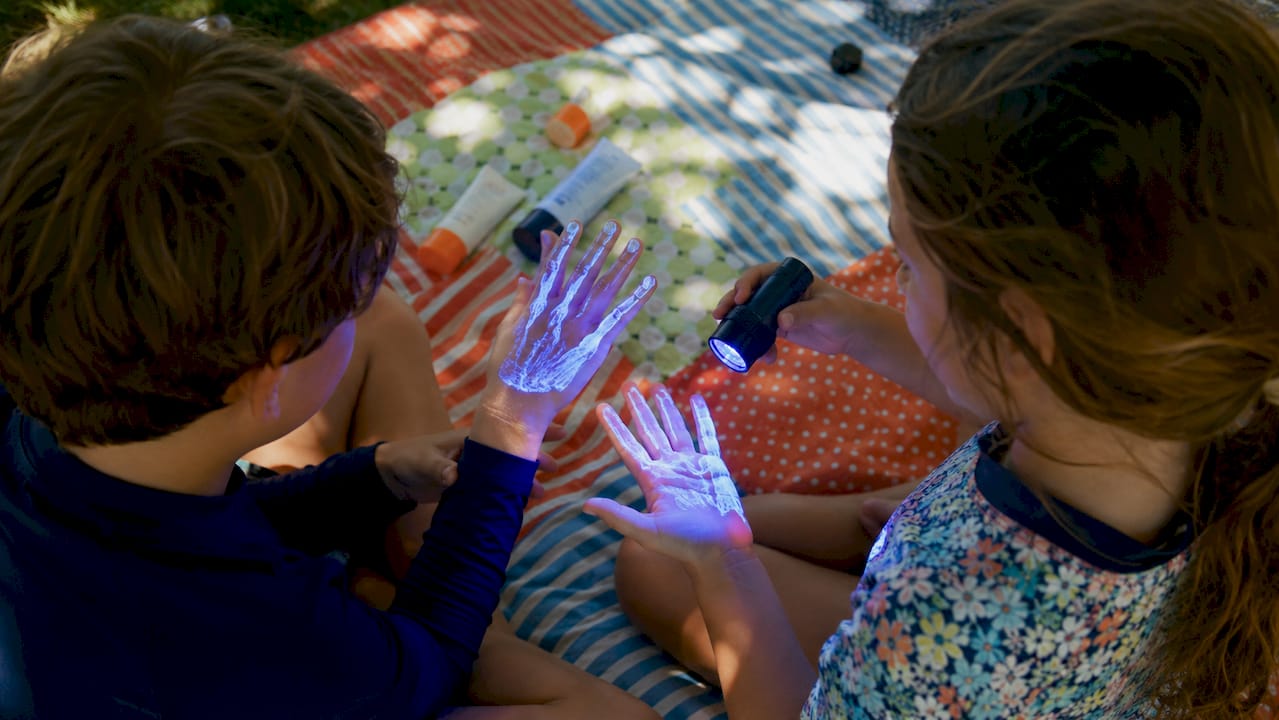
Turn sunscreen application into a skill, not a chore. Set up a “sunscreen station” before any outdoor activity and let kids practice applying lotion to their own arms and legs. Walk them through the two-finger rule for the face and show them the spots most people miss, like the ears, back of the neck, and tops of feet. Repetition builds muscle memory, and kids who practice this routine independently are more likely to ask for sunscreen before heading outside.
Pro Tip: Use a UV-reactive lotion that glows under a blacklight to show kids exactly which spots they missed. This visual feedback makes the lesson stick far better than verbal reminders.
2. Sun-safe dress-up day
Host a themed dress-up day where kids compete to build the most sun-safe outfit. Provide a bin of wide-brim hats, long-sleeve rash guards, and sunglasses. Award points for coverage, not style. This activity works well at birthday parties, school events, and summer camps. CDC guidance recommends combining protective clothing, hats, and shade rather than relying on sunscreen alone. Dress-up day makes that layered approach tangible and memorable.
3. Shade exploration game
Kids rarely think about shade as a tool. This game changes that. Set up a course in a backyard or park and ask children to identify every source of shade along the route, including trees, umbrellas, buildings, and canopies. Then ask them to rank each shade source by how much coverage it provides. Hands-on shade activities help children understand the difference between natural and man-made shade and why dense, overhead cover protects better than thin or partial shade.
4. Build a SunSmart diorama
This craft activity works best for kids ages 8 and up. Ask children to build a small model of an outdoor scene, like a playground or beach, and then add shade structures, hats on figures, and sunscreen stations. The SunSmart diorama activity from Generation SunSmart shows that visual and hands-on projects improve children’s understanding of shade types and how to apply sun safety during real play. The finished diorama also becomes a conversation piece that reinforces the lesson at home.
5. UV Index tracking game
Check the daily UV Index together before going outside. Assign each UV level a color-coded action: green means standard protection, yellow means add a hat, orange means add sunglasses and seek shade, red means limit time outdoors. Kids who track the UV Index learn that sun protection depends on UV radiation, not on how hot or sunny it feels. This is one of the most practical outdoor sun awareness games you can build into a daily routine.
6. Myth-busting card game
Print a set of sun safety myth cards and truth cards, then play a matching game. Include myths like “you can’t get sunburned on a cloudy day” or “windburn is caused by cold wind.” Children who play myth-busting games learn to question assumptions about when protection is needed. The windburn misconception is especially common. Kids who understand that UV radiation causes skin damage regardless of temperature are more likely to apply sunscreen on cool or overcast days.
7. Sunscreen relay race
Divide kids into teams. Each team must correctly apply sunscreen to a doll or stuffed animal before tagging the next player. Add checkpoints where a parent or caregiver inspects coverage and sends players back if they missed a spot. This activity combines physical play with a practical skill. It also removes the resistance many kids feel toward sunscreen by framing application as part of the game rather than an interruption.
8. Sun safety storytime
Read-aloud sessions work well for younger children ages 3–6. Choose books that feature characters who wear hats, seek shade, or apply sunscreen as part of outdoor adventures. After the story, ask kids to name one sun-safe thing the character did. Connecting sun protection to a character they like builds positive associations early. Framing sun safety as a routine life skill, similar to toothbrushing, improves long-term compliance in both children and parents.
9. Hat decorating station
Give kids plain wide-brim hats and fabric markers or iron-on patches. Let them personalize their hats before an outdoor event. Children are significantly more likely to wear gear they helped create. This activity works at school events, birthday parties, and community gatherings. Pair it with a quick lesson on why wide brims protect the face, ears, and neck better than baseball caps.
How to incorporate sun safety into outdoor events for kids
Outdoor events are the best classroom for kids sun safety education because the risks are real and the lessons are immediate. A few structural changes to how you run events make sun protection automatic rather than optional.
- Schedule sunscreen breaks. Build a two-minute sunscreen reapplication stop into the event timeline every 90 minutes. CDC recommends planned reapplication breaks during outdoor play, especially after water activities or sweating.
- Create a shade map. Before the event starts, walk kids through the venue and mark shaded zones on a simple hand-drawn map. Give each child a copy. This turns shade-seeking into an active choice rather than a passive reaction to discomfort.
- Use dress codes. Announce a “sun-safe dress code” for outdoor events. Require wide-brim hats and UV-protective shirts. Parents who receive this in advance come prepared, and kids normalize the gear.
- Set up a hydration station. Place water and sun-safe snacks like fruit and yogurt in a shaded area. Hydration supports the body during heat exposure and gives kids a reason to move into shade regularly.
- Check the UV Index as a group. At the start of the event, pull up the UV Index on a phone and announce the level. Assign a child to be the “UV monitor” for the day. This role creates ownership and keeps sun awareness active throughout the event.
Pro Tip: The free BANZ Protect app provides real-time UV and noise monitoring. Assign a child to check it every hour and report the UV level to the group. Kids take the responsibility seriously and the habit transfers to their own outdoor time.
Comparing sun safety tools and materials for kids’ activities
Choosing the right gear and resources shapes how effective your sun protection activities for children will be. The table below compares the main options across key factors.
| Tool or material | Best for | Key advantage | Limitation |
|---|---|---|---|
| Broad-spectrum SPF 30+ sunscreen | Daily use and events | Covers exposed skin; widely available | Requires reapplication every 90 minutes |
| UPF 50+ clothing and rash guards | Active outdoor play | Constant protection without reapplication | Does not cover face or hands |
| Wide-brim hats (UPF 50+) | Face, ear, and neck coverage | Pairs with all other protection methods | Kids may resist wearing them |
| UV-blocking sunglasses | Eye protection | Reduces UV exposure to eyes and surrounding skin | Fit and retention can be difficult for young children |
| Printable activity kits | Classroom and home education | Low cost; reinforces behavioral habits | Requires adult facilitation |
| Physical shade structures | Events and playgrounds | No application needed; covers groups | Not always available; partial shade is less effective |
CDC guidance is clear that layering multiple defenses produces better outcomes than any single method. Sunscreen alone is not sufficient for active children spending extended time outdoors. Combining UPF clothing, a wide-brim hat, sunglasses, and shade gives children the most complete protection during summer safety activities.
For parents looking for gear that meets these standards, BANZ offers UPF 50+ sun hats for kids designed specifically for active outdoor use.
Common misconceptions about sun safety kids believe
Children do not naturally connect UV radiation with skin damage. They connect sunburn with heat and brightness. That gap in understanding leads to under-protection on the days when UV exposure is actually highest.
- “It has to be hot to get sunburned.” UV radiation and air temperature are independent. A cool, overcast day in spring can carry a UV Index of 7 or higher. Teaching UV Index awareness corrects this assumption and improves protective behavior on days kids would otherwise skip sunscreen.
- “Windburn is from the wind.” Windburn is caused by UV radiation, not cold air. This is one of the most persistent myths among school-age children. Myth-busting games that directly address this misconception improve compliance on cool and windy days.
- “Sunscreen is enough.” The American Academy of Pediatrics states that sunscreen alone is insufficient for active children. Physical barriers like clothing and hats must be part of the routine.
- “I don’t need sunscreen because I have dark skin.” UV radiation damages all skin types. Melanin provides some natural protection, but it does not eliminate the risk of UV-related skin damage.
“Children do not intuitively equate UV radiation risks with heat. Education must clarify that the UV Index is the true sunburn risk indicator, not temperature or cloud cover.” — Generation SunSmart
The most effective fun sun safety lessons address these myths directly rather than assuming kids already understand the basics. Activities that include a myth-busting component produce faster and more durable behavior change than activities that only teach correct behavior without addressing what kids already believe.
Key takeaways
Teaching sun safety through hands-on activities produces lasting behavioral change, not just short-term awareness.
| Point | Details |
|---|---|
| Start early | Children account for 25% of lifelong sun exposure, making early education critical. |
| Use the Slip, Slop, Slap framework | This five-step framework anchors every activity to a specific protective behavior. |
| Layer protection methods | Combine sunscreen, UPF clothing, hats, sunglasses, and shade for complete coverage. |
| Address myths directly | Correcting the windburn myth and UV-heat confusion improves compliance on cool days. |
| Build routines, not rules | Framing sun safety like toothbrushing creates habits children maintain independently. |
Why I think most sun safety education misses the point
Most sun safety programs hand kids a pamphlet and call it done. That approach does not work. I have seen it fail repeatedly, and the research backs that up. School programs that focus on behavioral change rather than information transfer produce measurable results. Children in those programs start packing their own sunscreen and choosing to wear hats without being told.
The real challenge for parents is not finding the right sunscreen. It is making protection feel normal. Kids resist anything that feels like an interruption to fun. The activities in this article work because they make sun safety part of the fun, not a condition for participating in it.
The windburn myth is a perfect example of why content matters as much as format. A child who believes cold wind causes windburn will skip sunscreen on a breezy spring day and get burned. Correcting that one belief changes behavior in a way that no amount of “remember to wear sunscreen” reminders ever will.
My practical advice: pick two or three activities from this list and repeat them consistently across the summer. Repetition builds the habit. One diorama project and one UV Index tracking routine, done every week, will do more for your child’s long-term sun safety than a single intensive lesson ever could. Consistency beats intensity every time.
— Shari M. Murphy
BANZ gear for sun safety activities and outdoor events
BANZ has protected over 2 million families across six continents with UPF 50+ sun protection gear built specifically for children. Every product is designed to make layered sun protection practical for parents and comfortable enough that kids actually wear it.
For outdoor events and summer activities, the BANZ outdoor sun safety gear guide covers the full range of protective options for 2026. Parents planning group events can also check the BANZ picnic and outdoor gear collection for shade solutions and family adventure essentials. The free BANZ Protect app adds real-time UV monitoring to any outdoor outing, giving caregivers an extra layer of confidence when kids are active outside.
FAQ
What age should kids start learning sun safety?
Sun safety education can begin as early as age 2–3 through simple routines like hat-wearing and sunscreen application. The American Academy of Pediatrics recommends avoiding direct sun exposure entirely for infants under 6 months.
How often should sunscreen be reapplied during outdoor events?
Sunscreen should be reapplied every 90 minutes during outdoor activity, and immediately after swimming or heavy sweating. The CDC recommends building planned reapplication breaks into outdoor event schedules.
Does UPF clothing replace sunscreen for kids?
UPF 50+ clothing provides reliable protection for covered areas but does not protect the face, hands, or other exposed skin. Sunscreen, hats, and sunglasses are still needed alongside protective clothing.
What is the UV Index and why does it matter for kids?
The UV Index measures the strength of UV radiation on a given day, independent of temperature. A UV Index of 3 or higher signals that sun protection is needed, even on cool or cloudy days.
How do I make sun safety fun for reluctant kids?
Relay races, myth-busting card games, and hat decorating stations all make protection feel like play rather than obligation. Interactive activities outperform lectures for sun safety learning in younger children.
Recommended
- Why Summer Programs Require Sun Protection for Kids – BANZ® Carewear USA
- Outdoor Sun Safety Gear Examples for Kids in 2026 – BANZ® Carewear USA
- Sun Protection Layers for Toddlers: Real Examples – BANZ® Carewear USA
- Packable Sun Protection for Kids: A Parent’s Guide – BANZ® Carewear USA
Put sun safety into action
BANZ® UPF 50+ swimwear and rash guards are made for every sunny adventure — not just the pool. Playgrounds, parks, hikes and beach days included.
Shop UPF Protective Clothing → Ask a Sun Safety Expert →