

UPF 50 is meaningfully better than UPF 30, and the math is more significant than the raw percentages suggest. A UPF 30 fabric blocks about 96.7% of UV radiation and allows roughly 3.33% through; UPF 50 blocks about 98% and allows only 2% through. That 1.3-percentage-point gap translates to UPF 30 transmitting approximately 65% more UV than UPF 50 when you look at transmitted fractions. For most adults on a short errand, UPF 30 is adequate. For children, anyone with photosensitivity, or anyone spending a full day outdoors, UPF 50+ is the clear choice.
Key Takeaways
| Point | Details |
|---|---|
| UPF 50 vs 30 transmission gap | UPF 30 transmits ~3.33% of UV; UPF 50 transmits ~2%, meaning UPF 30 lets through about 65% more UV. |
| Default choice for children | Always choose UPF 50+ for kids; their lifetime UV accumulation starts early. |
| UPF 30 is acceptable short-term | For adults on outings under 90 minutes with sunscreen and a hat, UPF 30 provides very good protection. |
| Verify before buying | Look for a numeric UPF rating, a referenced testing standard, and the Skin Cancer Foundation Seal where possible. |
| BANZ for kids’ sun protection | BANZ offers UPF 50+ hats, swimwear, and sunglasses with a free UV-monitoring app for real-time outdoor planning. |
Table of Contents
- What UPF measures and how it differs from SPF
- The exact numbers: UPF 50 vs 30 protection compared
- Real-world factors that change a garment’s effective UV protection
- When to choose UPF 50/50+ vs UPF 30
- How to combine UPF clothing with sunscreen and other sun-safe measures
- How to verify UPF claims before buying
- Why experts recommend UPF 50+ for children and high-risk groups
- Sun protection gear for kids: what to look for
- Sources
What UPF measures and how it differs from SPF
UPF stands for Ultraviolet Protection Factor. It measures how much UVA and UVB radiation a fabric blocks, not just one type. A garment rated UPF 50 allows 1 out of every 50 units of UV to pass through. The rating comes from lab testing: a spectrometer measures transmission across the UV spectrum, and the result is expressed as a ratio of unfiltered to filtered radiation.
SPF works differently. It measures only UVB protection unless the sunscreen is labeled “broad-spectrum,” in which case it also addresses UVA. The Skin Cancer Foundation draws a clear line: UPF covers both UVA and UVB by definition, while SPF alone does not.
A practical difference worth noting: UPF ratings are more consistent in real-world use than sunscreen protection because fabric performance does not depend on how well you applied it or whether you remembered to reapply. Sunscreen wears off, rubs off, and gets missed in patches. A UPF garment works as long as it fits and covers the skin.
UPF vs. SPF at a glance:
| Feature | UPF (clothing) | SPF (sunscreen) |
|---|---|---|
| UV types covered | UVA + UVB | UVB only (unless broad-spectrum) |
| Application required | No | Yes, and reapplication needed |
| Consistency in use | High | Variable |
| Tested standard | Lab-measured fabric rating | Lab-measured sunscreen formula |
The exact numbers: UPF 50 vs 30 protection compared
The percentage difference between UPF 30 and UPF 50 looks small on paper. In practice, the transmitted-fraction view tells a more useful story.
| UPF Rating | UV Blocked | UV Transmitted | Protection Category |
|---|---|---|---|
| UPF 15 | 96.7% | 3.33% | Good |
| UPF 30 | 96.7% | 3.33% | Very Good |
| UPF 50 | 98% | 2% | Excellent |
| UPF 50+ | >98% | <2% | Excellent |
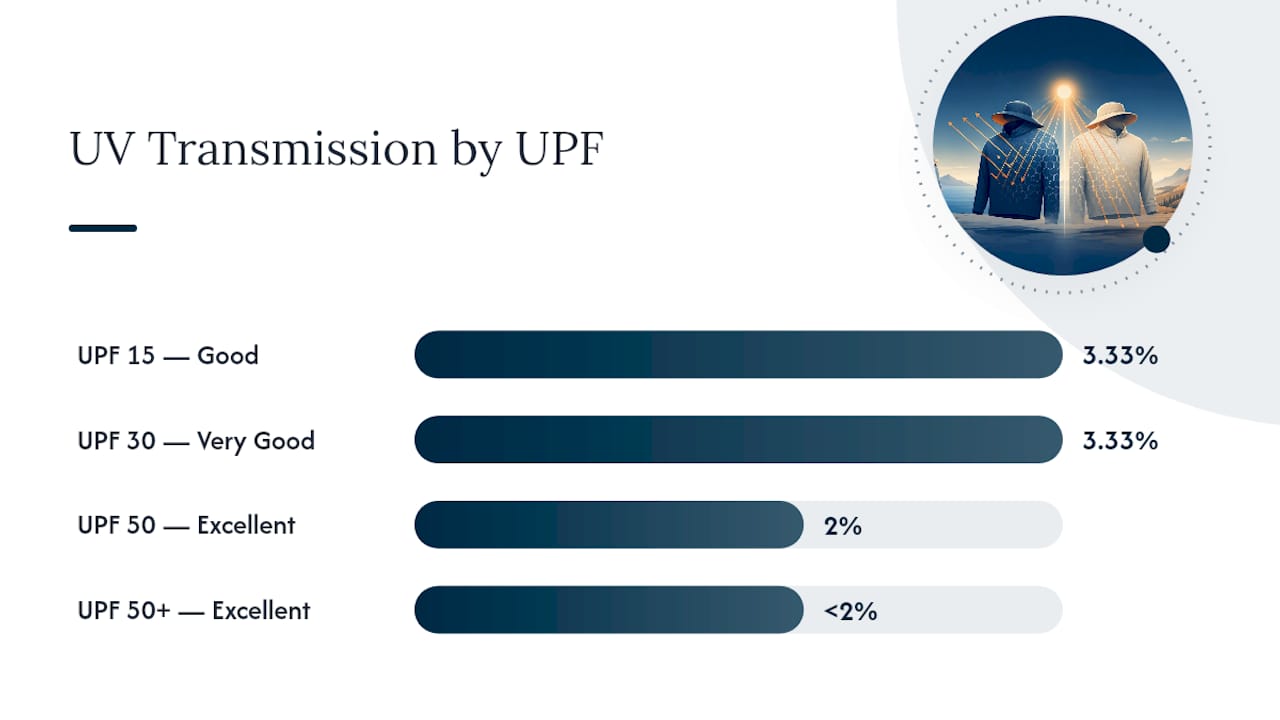
Per Kit Authority’s UPF guidance, UPF 30–49 is classified as “very good” and UPF 50+ as “excellent.” The Skin Cancer Foundation uses the same framework and reserves its Seal of Recommendation exclusively for fabrics that test at UPF 50 or higher.
The transmission math is where the difference becomes concrete. On a two-hour beach session, that gap is minor. On a six-hour fishing trip or a full day of outdoor work, the cumulative UV dose reaching the skin through a UPF 30 garment is noticeably higher than through a UPF 50 garment.
Scenarios where the gap matters most:
- Children: Their skin accumulates UV damage over a lifetime. Starting with maximum protection early reduces long-term risk.
- Melanoma survivors or people with a family history of skin cancer: Dermatologists typically recommend UPF 50+ as a baseline.
- People on photosensitizing medications (certain antibiotics, diuretics, retinoids): These drugs increase UV sensitivity, making the extra margin of UPF 50 clinically relevant.
- Athletes and outdoor workers spending four or more hours in direct sun: Cumulative exposure adds up across a season, not just a single day.
- High UV-index locations: At UV index 8 or above (common in summer across the southern United States), every percentage point of transmission reduction counts.
Real-world factors that change a garment’s effective UV protection
A labeled UPF rating reflects lab conditions. What you wear in the field can perform better or worse depending on several variables.
Fabric type and weave density are the biggest drivers. Tightly woven synthetics like polyester and nylon typically test higher than loosely woven natural fibers. A standard white cotton T-shirt tests at roughly UPF 5–7 when dry and can drop further when wet. That is far below the UPF 30 threshold, which is why everyday clothing is not a substitute for rated sun-protective garments.
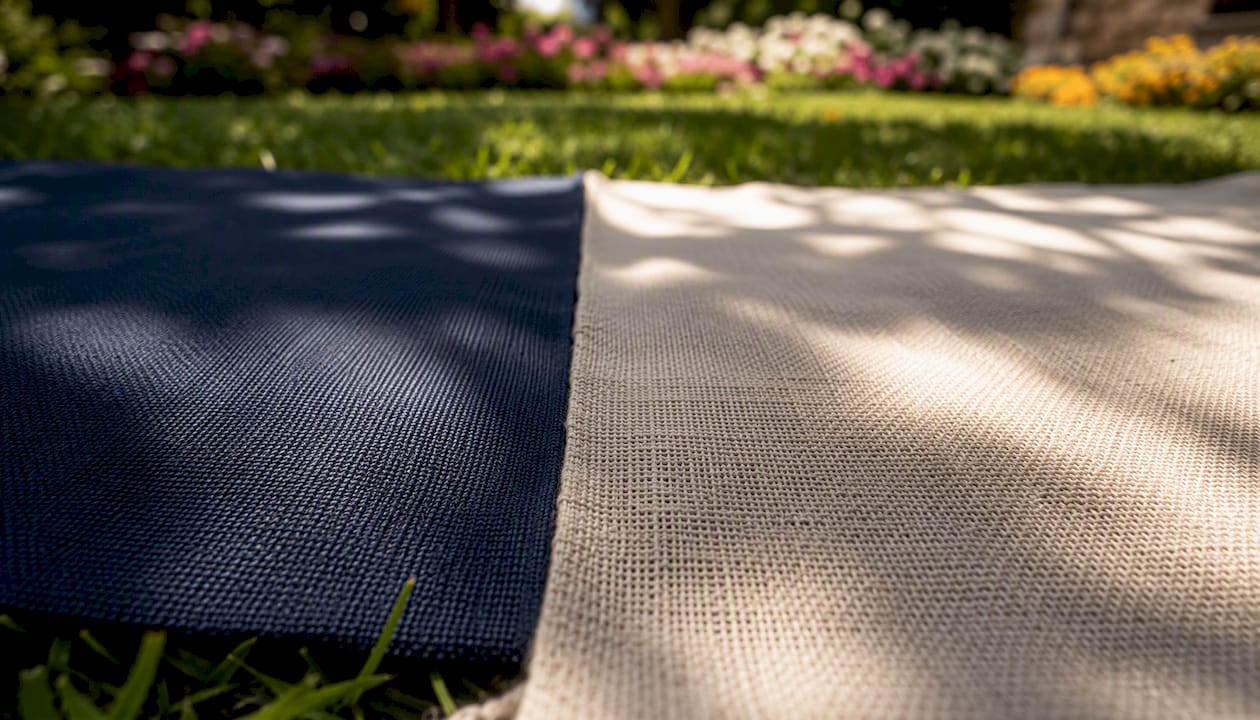
Color plays a secondary role. Darker and more saturated colors generally absorb more UV, but material choice matters more than color alone. A dark untreated cotton still underperforms a light treated synthetic.
Stretch and wetness reduce protection. Stretching a fabric thins the weave and increases UV transmission. Getting wet has a similar effect on many natural-fiber garments. Treated synthetics hold their rating better under both conditions.
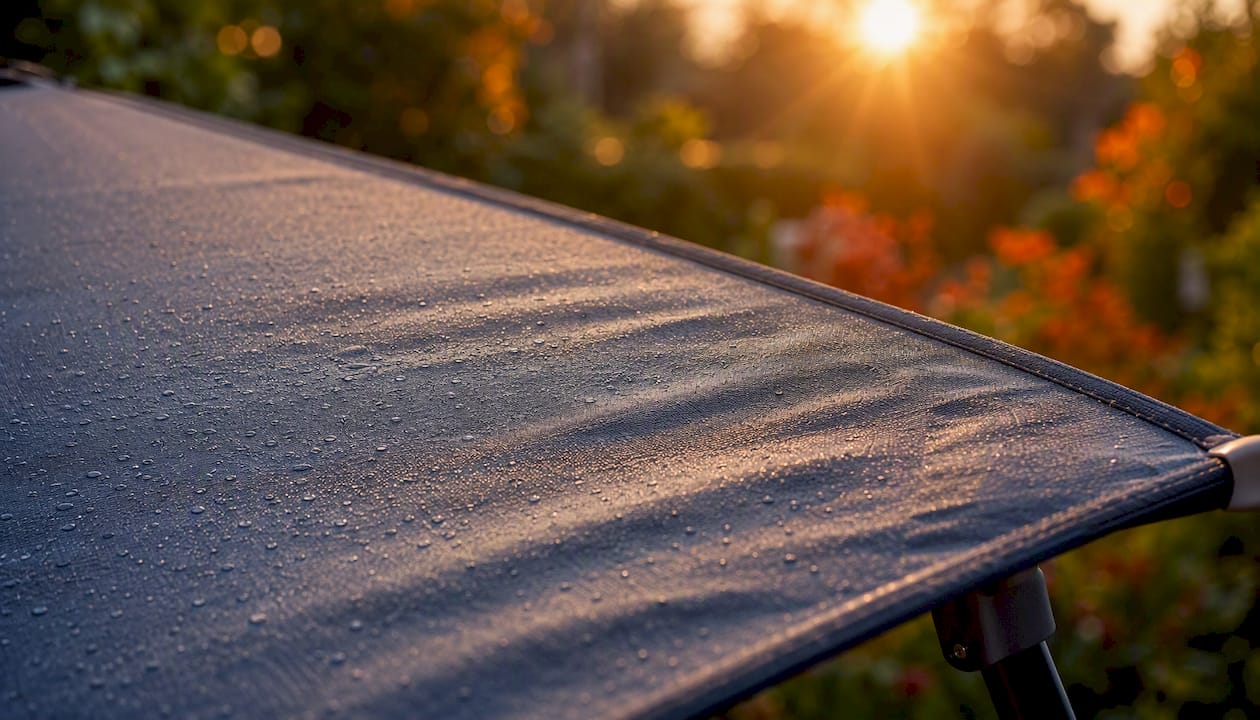
Wear and laundering degrade UPF over time. Repeated washing, abrasion, and prolonged UV exposure all reduce a garment’s protective capacity. Follow the care label, avoid bleach, and consider replacing heavily used sun-protective items each season.
Fit and coverage are often overlooked. A UPF 50 shirt that rides up and exposes your lower back offers no protection there. Long sleeves, high collars, and full coverage matter as much as the rating itself.
Pro Tip: Check whether a garment’s UPF rating was tested wet and stretched, not just dry and flat. Some brands publish this detail in their product specs. If it is not listed, assume the rating applies to dry, unstretched fabric only.
When to choose UPF 50/50+ vs UPF 30
The right UPF level depends on your situation. Work through these questions:
- How long will you be outdoors? Under 90 minutes with partial shade: UPF 30 is generally sufficient. Over two hours in direct sun: choose UPF 50+.
- Are you covering a child? Default to UPF 50+ for children regardless of duration.
- Do you have photosensitivity or a skin cancer history? UPF 50+ is the standard recommendation from dermatologists.
- What is the UV index? At UV index 6 or higher, UPF 50+ provides a meaningful extra margin.
- Will the garment get wet or stretched? If yes, a UPF 50+ garment gives you a buffer if the rating drops under those conditions.
- Are you relying on clothing alone, or layering with sunscreen and a hat? With full layering, UPF 30 on the body is more defensible. Without it, go higher.
Use-case breakdown:
- Quick errands or short outdoor play (under 60 minutes): UPF 30 with a hat and sunscreen on exposed skin is adequate for most adults.
- Beach or pool days: UPF 50+ swimwear and rash guards. Wet fabric loses protection, so the higher starting point matters.
- Hiking, cycling, or outdoor sports: UPF 50+ in a moisture-wicking synthetic. You will sweat, stretch, and move, all of which reduce effective protection.
- Children at any outdoor activity: UPF 50+ across the board. Pair with sun hats for UV protection and broad-spectrum sunscreen on the face, neck, and hands.
- Outdoor workers or athletes with multi-hour daily exposure: UPF 50+ is the practical default. The cumulative seasonal exposure makes the extra margin worth it.
For parents planning outdoor play equipment sessions or extended backyard time, pairing UPF 50+ clothing with outdoor play equipment that includes shade structures gives you two layers of protection working together.
How to combine UPF clothing with sunscreen and other sun-safe measures
UPF clothing and sunscreen are not competing choices. They cover different areas and work better together than either does alone.
The basic split: UPF clothing covers the body, and sunscreen covers what the clothing does not. That means the face, neck, ears, hands, and any exposed skin below the hem or sleeve. Dermatologist Dr. Shilpi Khetarpal recommends combining UPF clothing with broad-spectrum sunscreen on exposed skin as the standard layered approach.
Sunscreen reapplication is where most people fall short. Apply SPF 30 or higher broad-spectrum sunscreen 15 minutes before going outside. Reapply every two hours, and immediately after swimming or heavy sweating. A UPF shirt does not need reapplication. Sunscreen does.
Complementary measures that complete the system:
- A broad-brim hat (3-inch brim or wider) to protect the face, ears, and neck
- UV-rated sunglasses that block 99–100% of UVA and UVB
- Shade during peak UV hours (10 AM to 4 PM)
- Scheduling longer outdoor activities for early morning or late afternoon when the UV index is lower
Pro Tip: For parents managing sunscreen on active kids, apply it before dressing them. Cover the face, neck, ears, and hands, then add the UPF clothing on top. This removes the struggle of applying sunscreen over a shirt collar and makes sure no skin gets missed at the edges. Check the photoprotection guide for kids for age-specific tips.
How to verify UPF claims before buying
Not every garment labeled “sun protective” has been independently tested. Here is how to confirm a rating is real before you buy.
Steps to verify:
- Look for a specific numeric UPF rating on the label or product page. “Sun protective” with no number is a marketing claim, not a tested rating.
- Check whether the brand references a testing standard. In the United States, ASTM D6603 and AS/NZS 4399 are the two most common standards used for UPF testing.
- Look for the Skin Cancer Foundation Seal of Recommendation. The Foundation awards this seal only to fabrics that test at UPF 50 or higher, making it a reliable shortcut for verification.
- Read the product description for testing details. Reputable brands specify whether the rating was tested wet, dry, or both.
Red flags to avoid:
- “Sun protective” or “UV resistant” with no UPF number
- Off-white or thin cotton items with no rating listed
- “UPF rated” without any reference to a testing method or standard
- No care instructions related to maintaining the UPF rating
What “UPF 50+” actually means:
The “+” in UPF 50+ is a testing ceiling, not a vague claim. Lab equipment reliably measures UV transmission up to UPF 50. Fabrics that exceed this threshold receive the “50+” label because the equipment cannot precisely quantify protection above that point. A UPF 50+ garment blocks more than 98% of UV, but the exact figure above 98% is not reported. The label is a floor, not a range.
Durability matters too. UPF can decline with repeated washing, stretching, and UV exposure. Follow care instructions, skip bleach, and replace heavily used sun-protective garments each season if you rely on them for all-day protection.
Why experts recommend UPF 50+ for children and high-risk groups
The clinical rationale for prioritizing UPF 50+ in certain populations is consistent across dermatology guidance and major health organizations.
Children’s skin is more UV-sensitive than adult skin, and cumulative UV exposure over a lifetime is the primary driver of skin cancer risk. Protecting children early reduces that lifetime total. The Skin Cancer Foundation’s position is direct: UPF 50+ is the standard for excellent protection, and its Seal of Recommendation reflects that threshold.
For people with photosensitivity, a personal or family history of melanoma, or conditions that increase UV sensitivity, the extra margin of UPF 50+ over UPF 30 is not theoretical. It represents a meaningful reduction in the UV dose reaching the skin over repeated, extended exposures.
Product types families typically prioritize for full-day outdoor coverage:
- Long-sleeve rash guards and swim shirts for pool and beach days
- Wide-brim hats with neck flaps for face and neck coverage
- UPF-rated swimwear that holds its rating when wet
- UV-blocking sunglasses for eye protection
Pro Tip: The free BANZ Protect app provides real-time UV index monitoring, so you can check the UV level before heading outside and time outdoor activities around lower-risk windows. Pair it with UPF 50+ kids’ sun safety resources for a complete planning toolkit.
For a deeper look at how UPF 50 performs specifically for children’s apparel, the UPF 50 explained guide covers testing methodology and what to look for in kids’ garments.
The case for defaulting to UPF 50+
The evidence points in one direction: when in doubt, choose UPF 50+. For a single short outing, that difference is manageable. Across a summer of outdoor activities, it accumulates. Children, in particular, do not get a reset on lifetime UV exposure. Choosing UPF 50+ costs nothing extra in comfort and removes the need to calculate whether today’s outing crosses the threshold where the rating matters. The practical answer is to default to the higher rating and use sunscreen on everything the clothing does not cover.
Sun protection gear for kids: what to look for
BANZ offers UPF 50+ sun protection gear built specifically for children, covering the product types that matter most for outdoor days.
The range includes UPF 50+ sun hats, swimwear, and sunglasses designed for children from infancy through school age. Every item in the sun protection line is rated UPF 50+, meeting the Skin Cancer Foundation’s threshold for excellent protection. The free BANZ Protect app adds real-time UV monitoring so parents can track UV index conditions before and during outdoor time.
For parents ready to shop or compare options, the kids’ sun safety resource library brings together product recommendations, UV index guidance, and links to CDC, EPA, and WHO sun-safety resources in one place. Browse the full range and check current availability there.
Sources
- Sun-Protective Clothing | Skin Cancer Foundation
- Does sun-protection clothing actually work? | Cleveland Clinic Health Essentials
- How to Choose Sun-Protective Hiking Clothes | Backpacker
- UPF 50 vs UPF 30: What’s the Real Difference in UV Protection? | UV-Blocker
Recommended
- UPF 50 Explained: What the Rating Really Means – BANZ® Carewear USA
- UPF 50 Protection for Kids: What Parents Need to Know – BANZ® Carewear USA
- Sun Sleeves That Work: UPF 50+ Buying Guide for Families – BANZ® Carewear USA
- UV Protection Swimsuit for Kids and Caregivers: UPF 50+ Guide – BANZ® Carewear USA
