

Cold water, gentle cycle, mild detergent, air dry in the shade. That’s the whole rule. Skip the bleach, skip the fabric softener, and rinse the garment right after saltwater or chlorine touches it. Follow the care label first, always. Cared for this way, most UPF 50+ garments hold their rating for dozens of washes before fading or thinning signals it’s time to replace them.
TL;DR:
- Washing in cold water inside out with a mild, fragrance-free detergent preserves the fabric’s UV blocking ability and prevents fiber damage.
- Air drying in shade or using no-heat dryer settings is essential to maintain UPF protection, as heat and mechanical stress loosen the fabric’s weave.
- Replacing a UPF garment is advisable after 30 to 100 washes or if it shows signs of thinning, fading, holes, or a loose fit.
- Rinsing swimwear and UPF clothing immediately after exposure to saltwater, chlorine, or sunscreen helps prevent fibers from degrading over time.
- Regularly rotating and properly storing UV gear away from sunlight prolongs its protective properties and extends its lifespan.
Table of Contents
- How Do You Wash UV Protection Clothing Without Damaging It?
- Why Heat Is the Real Enemy of UPF Fabric
- How Long Does UV Clothing Last, and How Should You Store It?
- What to Do About Sunscreen, Chlorine, and Bug Spray on UV Fabric
- What BANZ Learned From Building UPF 50+ Kids’ Gear
- Does Sun Exposure Itself Wear Down UV Clothing?
- What’s the Best Detergent for UV-Protective Fabrics?
- A Parent’s Honest Take on Keeping UV Gear Working
- Shop BANZ UPF 50+ Sun Hats for Kids
- Sources
- FAQ
How Do You Wash UV Protection Clothing Without Damaging It?
Turn the garment inside out before it goes anywhere near water. This one-step cuts down on abrasion against zippers, buttons, and the washing machine drum, which is where a lot of the fiber damage actually happens. Wash in cold water, ideally at or below 86°F (30°C), on a delicate or gentle cycle. If you have the time, hand washing is gentler still and worth it for a favorite piece.
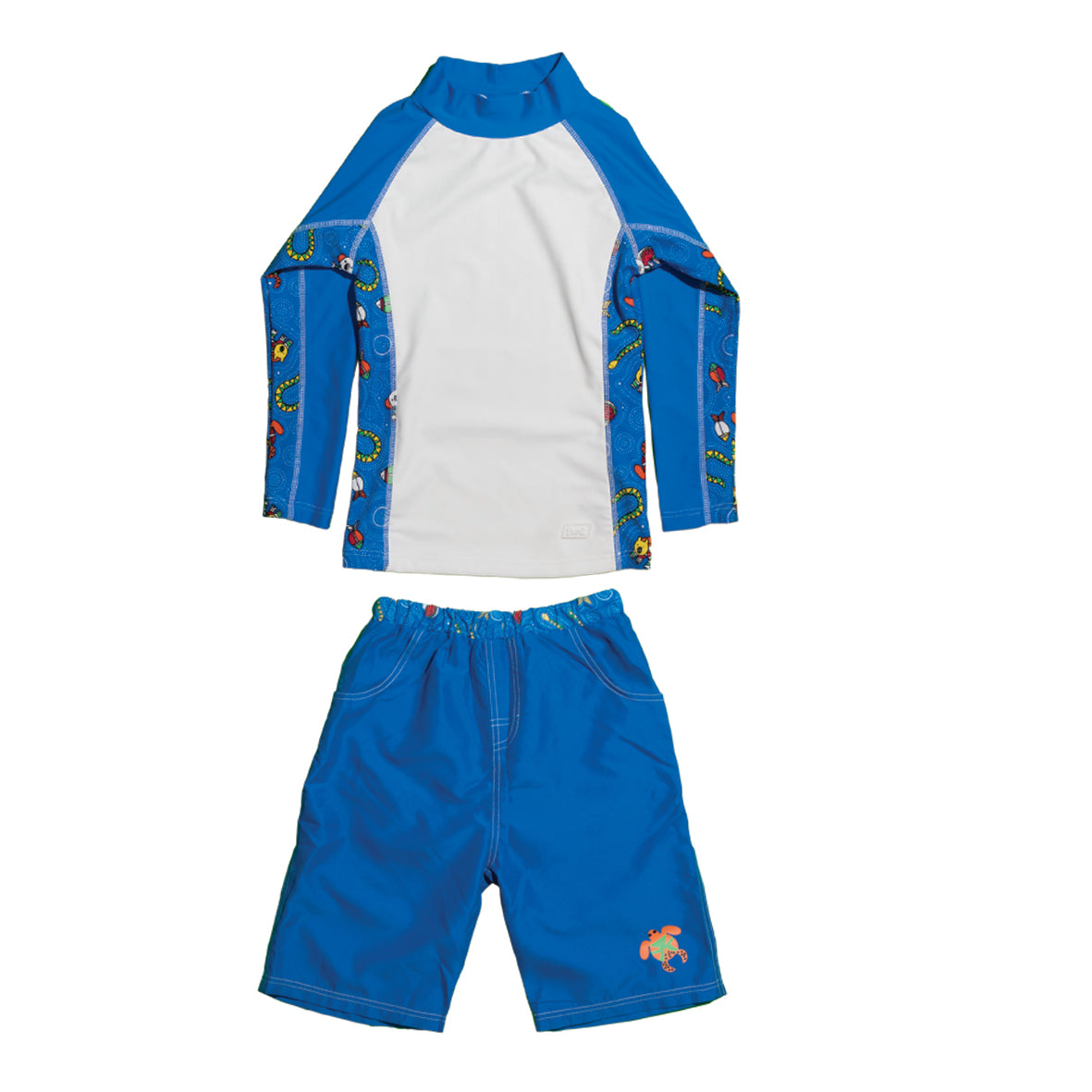
Detergent choice matters more than most parents realize. Skip anything with optical brighteners. Those additives make white clothes look “whiter” under fluorescent light, but they coat the fibers and can interfere with how the fabric blocks UV rays over time. A mild, fragrance-free detergent, or a technical sport wash made for performance fabrics, does the job without adding chemical residue to the weave. Bleach and fabric softener are both off the table. Bleach breaks down synthetic fibers, and softener leaves a coating that clogs the tight weave responsible for UV blocking in the first place, according to IQ-UV’s care guidance.
Stains happen fast with kids. Sunscreen, grass, popsicle drips, you name it.
- Blot, don’t rub, to lift excess residue before it sets into the fibers.
- Use a small amount of the same mild detergent as a spot treatment, worked in gently with a soft cloth.
- Rinse with cool water and let it soak briefly if the stain is stubborn, rather than scrubbing hard.
- Avoid spray-on stain removers that list optical brighteners or solvents on the label.
Pro Tip: Keep a mesh laundry bag just for sun-protective gear. Toss hats, rash guards, and swim shirts in it straight after a beach day, and you’ll never accidentally run them through a hot, heavy-duty cycle with the towels.
Why Heat Is the Real Enemy of UPF Fabric
Tumble dryers are convenient, but high heat is what quietly wears down UPF protection faster than almost anything else. Heat relaxes the tight weave that blocks UV rays, and repeated tumbling adds mechanical stress on top of that. Over enough cycles, the fabric loosens just enough that more UV light gets through, even if the garment still looks fine.
Air drying is the safer default. Lay knits flat to keep them from stretching out of shape, and hang woven items like hats and shirts in a shaded spot rather than direct sun. Ironically, leaving wet UPF clothing baking in full sun to dry faster works against you, since UV exposure combined with heat and moisture is a rough combination for the fibers.
If you’re in a genuine hurry, use the air-fluff or no-heat setting on the dryer, and treat it as an occasional exception, not a habit.
- Flat-lay knit fabrics like rash guards and leggings.
- Hang hats and woven shirts in shade, not direct sun.
- Use air-fluff or no-heat dryer settings only when necessary.
- Check the care label before ironing at all.
Ironing is rarely needed with UPF fabrics, and many care labels advise against it outright. If a label does permit it, use the lowest heat setting and a protective cloth between the iron and the fabric. Steaming is generally gentler than direct ironing if you need to smooth out wrinkles before a trip.
How Long Does UV Clothing Last, and How Should You Store It?
Store UPF garments dry and folded, in a breathable container or drawer, away from direct light. A damp swimsuit left balled up in a beach bag for two days is a fast track to mildew and fiber breakdown, so unpack and dry items the same day whenever possible. Avoid long-term storage under heavy compression, since flattened fibers can lose some of their structure over time.
On lifespan, expect real variation. Manufacturer estimates commonly range from around 30 to 100 washes depending on the fabric, weave, and how closely the care instructions are followed, according to WindRider’s care guidance for UPF fabrics. A few practical markers tell you when it’s time to retire a piece:
- Visible thinning or a fabric that feels noticeably less dense than when new.
- Small holes, snags, or seams pulling apart.
- Fading that’s significant enough to see, especially on dark or bright colors.
- The garment no longer fits snugly against the skin, since gaps and looseness let more UV light through regardless of the fabric’s rating.
For active families cycling through beach days and pool weekends all summer, a reasonable rule of thumb is to check swimwear and sun hats for these signs at the start of each season, and replace anything showing two or more of them.
What to Do About Sunscreen, Chlorine, and Bug Spray on UV Fabric
Pool and ocean days call for one habit above all: rinse the garment in fresh water as soon as possible after swimming. Salt and chlorine both sit on the fabric and continue working on the fibers even after the child is out of the water, and that slow chemical drying is exactly what shortens a garment’s protective life.
Sunscreen is trickier since it’s meant to be on the skin, not the shirt. Let sunscreen fully absorb before dressing your child whenever your schedule allows, since wet or fresh sunscreen transfers straight onto the fabric and can leave residue that eventually degrades fibers, per WindRider’s care notes. If a shirt or hat does pick up sunscreen residue, a gentle cold wash with mild detergent handles it. Skip cleaners marketed as “brightening,” since they often rely on the same optical brighteners you’re trying to avoid.
Insect repellent is its own concern. DEET can break down synthetic performance fabrics with repeated contact, while picaridin tends to be gentler on the same materials. If your family uses repellent often around UPF swimwear or hats, picaridin is the safer pairing.
- Rinse swimwear in fresh water immediately after pool or ocean time.
- Let sunscreen absorb fully before dressing kids in UPF gear.
- Choose picaridin over DEET for repeated use near synthetic UPF fabrics.
- Change out of wet garments reasonably promptly rather than leaving them on for hours.
Pro Tip: A wet UPF shirt can actually lose a bit of its protective power while soaked, so it’s smart to have a dry backup shirt in the beach bag for long pool days, not just a towel.
What BANZ Learned From Building UPF 50+ Kids’ Gear
Some sun protection brands focus on keeping kids safe from sun and noise without making parents’ lives harder. That focus shapes how these brands build and talk about UPF 50+ products.
- UPF 50+ construction in BANZ hats and swimwear is designed to hold up to regular family use, not just occasional wear.
- The free BANZ Protect app gives real-time UV monitoring, so you know when sun exposure is climbing before it becomes a problem.
- BANZ’s blog resources dig into wet-weather performance, including how UPF swimwear performs once it’s soaked at the pool or beach.
- For families weighing their next sun hat purchase, BANZ’s complete parent’s guide to UV protection walks through what actually matters when shopping for kids’ gear.
These aren’t abstract talking points. They’re the same practical habits this guide has walked through, just applied at the product level.
Does Sun Exposure Itself Wear Down UV Clothing?
Yes, and it’s separate from the wash-and-dry damage covered above. UV rays break down dyes and weaken fiber bonds over time, the same way outdoor furniture fabric fades and grows brittle after a summer on the porch. A UPF hat or shirt that lives outside all day, every day, all season, will lose some effectiveness faster than one that only comes out for specific outings.
This matters because clothing is one of the most reliable layers of sun protection available, according to the National Cancer Institute, and the Skin Cancer Foundation recommends UPF garments specifically as part of a layered sun-safety approach alongside shade and sunscreen. A garment that’s quietly lost protection through years of sun exposure isn’t doing that job anymore, even if it still looks wearable.
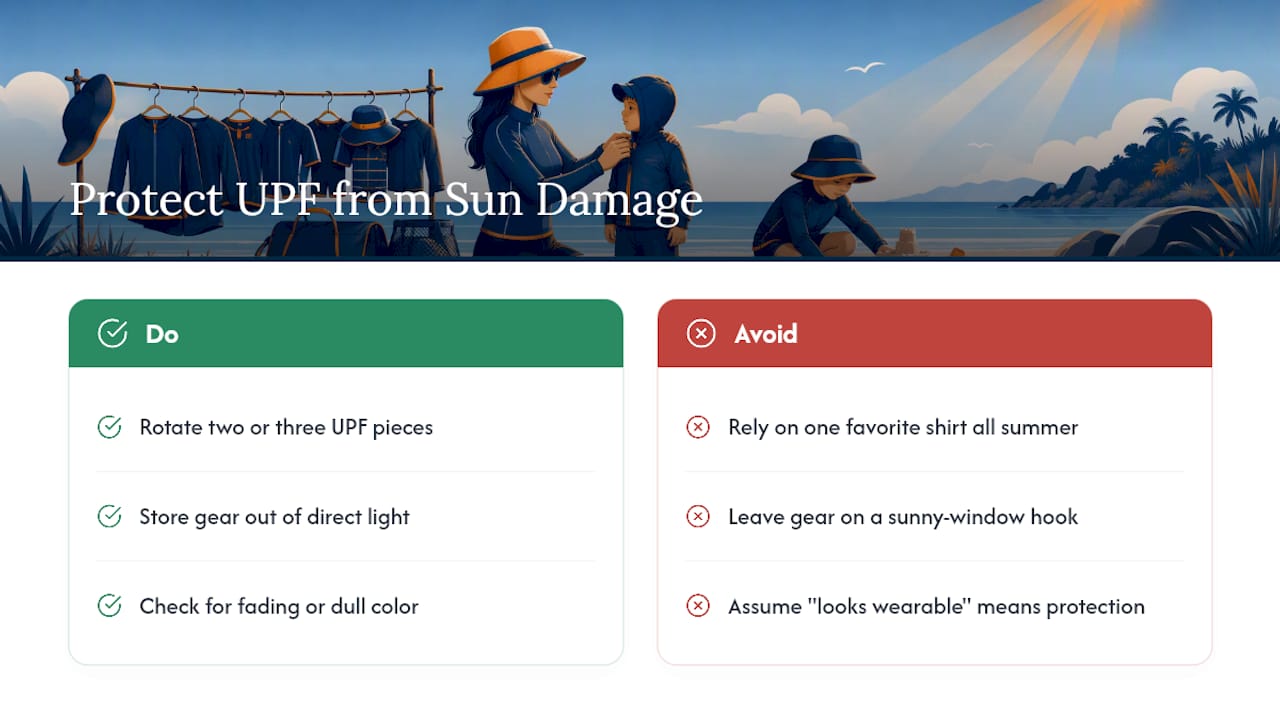
There’s no way to fully stop UV degradation on a piece of clothing that spends its life in the sun, that’s the fabric’s job, after all. But you can slow it down. Rotate two or three UPF pieces instead of relying on one favorite shirt for the entire summer. Store gear out of direct light between outings instead of leaving it on a hook by a sunny window. And keep an eye on color: a UPF shirt that’s visibly lighter or duller than it was last year is a fabric that’s absorbed a lot of UV energy, and its blocking power has likely dropped along with the color.
What’s the Best Detergent for UV-Protective Fabrics?
Mild, fragrance-free, and free of optical brighteners: that’s the short list of what to look for. Beyond that, technical sport detergents made for synthetic performance fabrics, the kind marketed for athletic wear or outdoor gear, tend to clean well without leaving a residue that dulls UV-blocking fibers.
Regular laundry detergents aren’t automatically off-limits, but check the label. Many mainstream formulas include brightening agents specifically because they make clothes look crisper under normal light, which is exactly the additive that can interfere with a fabric’s UV-blocking weave over repeated washes.
Liquid detergents generally rinse cleaner than powders, leaving less residue behind in tightly woven synthetic fabrics. Avoid anything labeled as a “color-safe bleach” alternative too, since many of these still contain oxidizing agents that are gentler than chlorine bleach but still hard on fiber structure over time.
If you’re washing UPF gear alongside a partner’s care routine tips for kids’ clothing generally, the same core principle applies across general children’s clothing care: gentler products and lower temperatures extend the life of fabric, whether or not it’s rated for sun protection. For UPF specifically, that gentleness isn’t just about keeping colors bright. It’s about keeping the weave doing its actual job.
A Parent’s Honest Take on Keeping UV Gear Working
Perfect lab-grade care isn’t realistic for most families, and it doesn’t need to be. What works is turning care into a habit instead of a chore: rinse swim gear the moment you’re home, keep a dedicated mesh bag for anything UPF-rated, and park a small drying rack somewhere in the house so air drying doesn’t feel like a separate errand. None of this takes extra time once it’s routine. It just replaces the habits that quietly wear UPF fabric down faster than it should.
— Shari M. Murphy
Shop BANZ UPF 50+ Sun Hats for Kids
Once the care routine is dialed in, the next step is making sure your child actually has a hat worth caring for. BANZ builds its sun hats specifically for the wear and tear of active kids, and each style solves a slightly different problem.
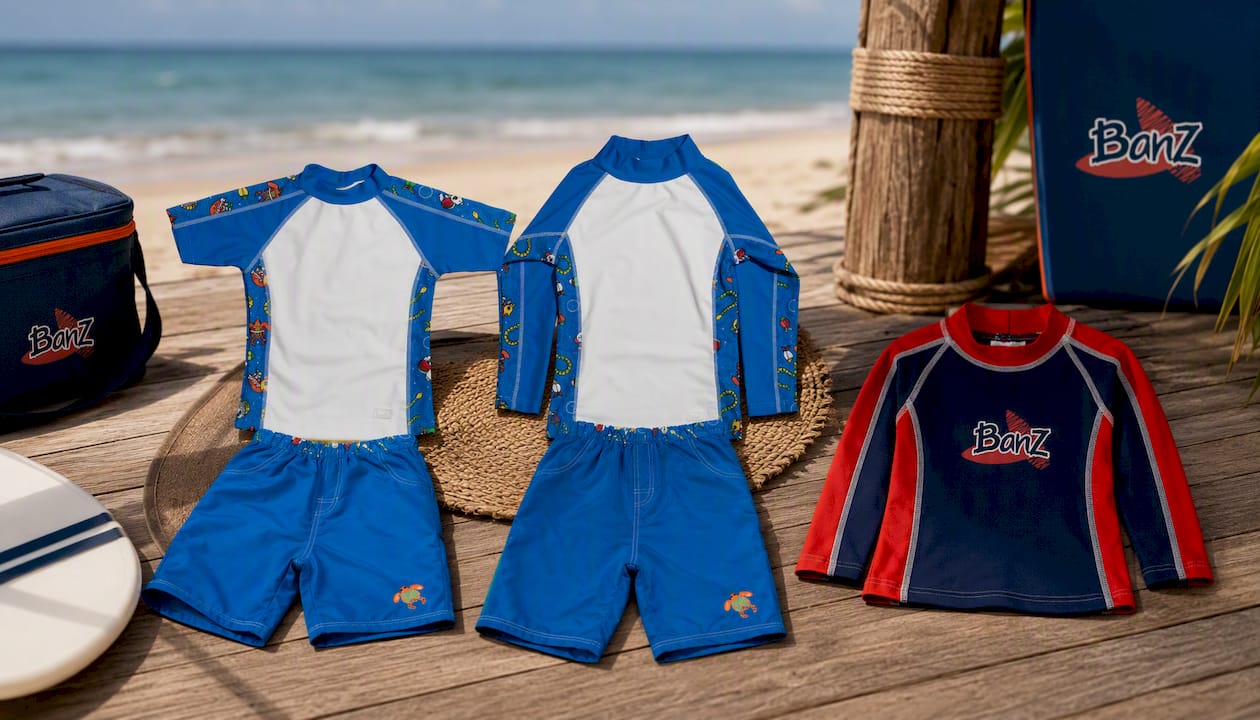
The Childrens Sun Hats with UPF 50+ Protection with Pocket suits families who want a hat that can fold small enough to stash in a diaper bag or backpack between outings. For toddlers who tend to yank hats off, the Childrens Sun Hats with UPF 50+ Protection with Toggle offers an adjustable chin toggle for a fit that stays put during play. If your child is past the toddler stage and has opinions about style, the Hello Sunshine Sunhat with Sequins gives UPF 50+ protection a look kids actually want to wear.
BANZ’s hearing protection lineup rounds out the outdoor kit, from the Baby Hearing Protection Earmuffs and Kids Hearing Protection Earmuffs in solid colors, to printed styles for babies and prints for kids, plus a combo set pairing earmuffs with wrap-around sunglasses for families who want sun and sound protection covered in one purchase. Browse the current hat styles and pick the fit that matches how your child actually wears their gear.
Sources
FAQ
How Do You Remove Optical Brighteners From UV Clothing?
Wash the garment on its own in cold water with a mild, fragrance-free detergent that contains no brighteners, and repeat if residue was heavy, since brighteners built up from past detergent use can take more than one gentle wash to fully rinse out.
How Long Does UV Clothing Last?
Most well-cared-for UPF 50+ garments hold their rating for roughly 30 to 100 washes, depending on the fabric and how closely you follow the care label, and visible thinning, holes, or significant fading are the signal to replace it.
Can UV Shirts Go in the Dryer?
Air drying is the safer choice since high heat and tumbling loosen the weave that blocks UV rays; if you must use a dryer, stick to the air-fluff or no-heat setting and treat it as the exception, not the norm.
Do UV Protection Shirts Actually Work?
Yes. UPF 50+ clothing is recommended by the Skin Cancer Foundation as an effective layer of sun protection, and it keeps working reliably as long as it’s washed, dried, and stored the way its care label describes.
Does Wet UV Clothing Still Protect Against the Sun?
Wet UPF fabric can lose a small amount of its protective effect while soaked, so packing a dry backup shirt for long pool or beach days is a smart habit for keeping protection consistent.