

Put UV400 first, no matter what. Beyond that, choose polarized lenses for water, boats, and car rides, mirrored lenses for snow, sand, and high-altitude glare, and a hybrid lens when your child moves between both settings in the same week. BANZ® builds child-specific UV400 protection into its sunglasses lineup, so the safety baseline is covered before you even weigh mirrored vs. polarized for your kid’s activities.
TL;DR:
- Polarized lenses effectively reduce horizontal glare from water and roads, while mirrored lenses provide overall brightness reduction suitable for snow and high-altitude environments.
- Children’s sunglasses must have UV400 protection, impact-resistant polycarbonate or Trivex lenses, and wraparound coverage to withstand active play and ensure safety.
- For water activities, polarized sunglasses are optimal; for snow and reflective landscapes, mirrored lenses offer better visibility and brightness control.
- Most glare reduction benefits from polarization are limited to horizontal glare, with polarization potentially impairing LCD screen visibility.
- Prioritizing UV400 protection and activity-appropriate lens choice is crucial, with impact resistance and fit often outweighing lens technology complexity for children.
Table of Contents
- Mirrored vs. Polarized Kids’ Sunglasses: What’s the Real Difference?
- How Polarized Lenses Cut Glare for Active Kids
- Mirrored or Polarized: What’s Best for Each Activity?
- What to Check Before You Buy Kids’ Sunglasses
- Why Children’s Eyewear Needs a Different Standard
- The Perspective Most Buying Guides Miss
- Gear Up With BANZ® for Whatever the Day Brings
- Sources
Mirrored vs. Polarized Kids’ Sunglasses: What’s the Real Difference?
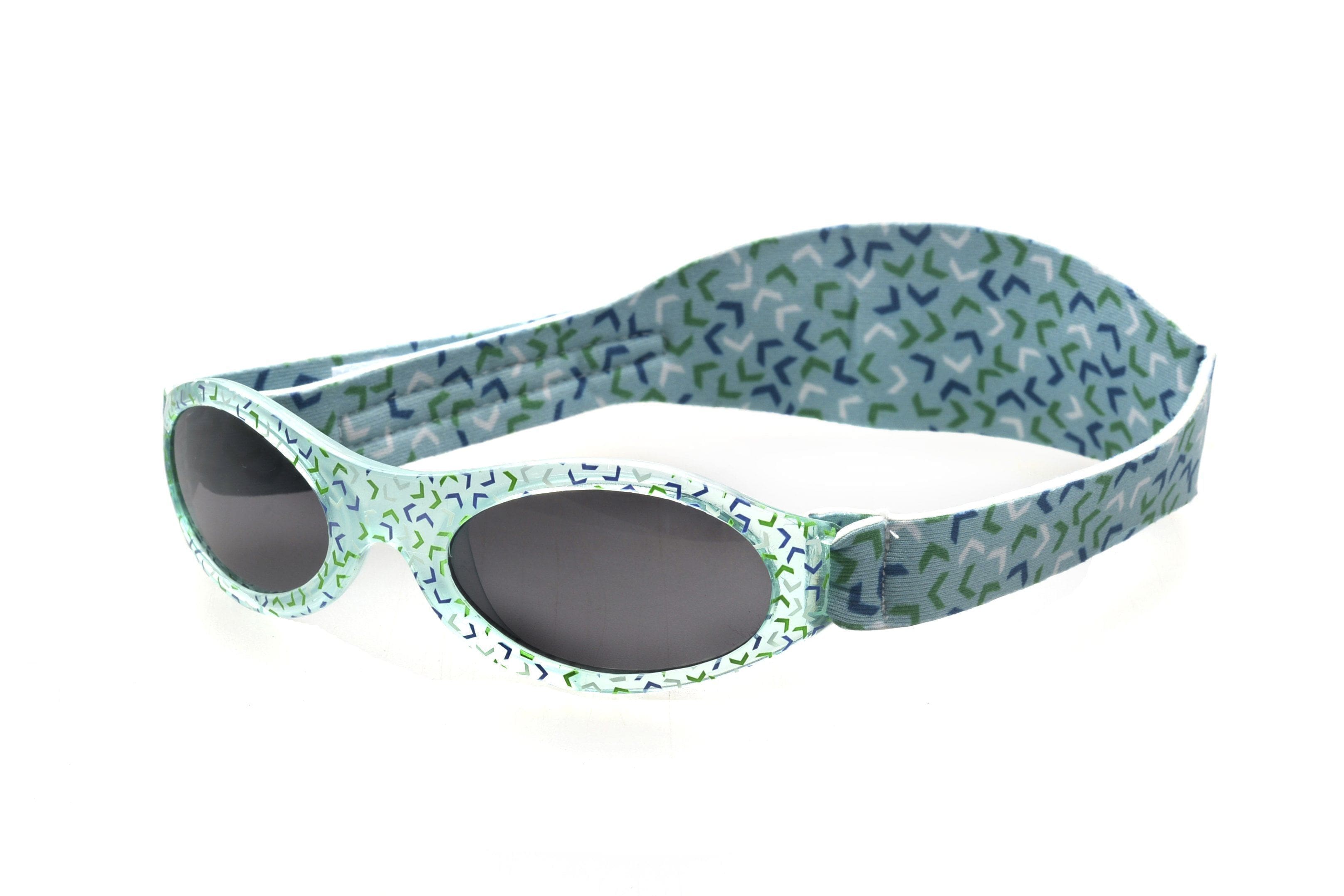
Mirrored and polarized lenses solve two different problems, and mixing them up is the most common mistake parents make at the sunglasses rack. Mirrored lenses have a reflective coating on the outer surface that bounces light away before it reaches the eye. Polarized lenses use a chemical filter embedded in the lens that blocks a specific type of light wave, cutting glare rather than just dimming everything.
That distinction matters for a five-year-old squinting on a boat versus one building a sandcastle at noon. Mirrored coatings reduce overall light transmission by roughly 10 to 60 percent depending on the tint and coating, which is why they work so well against snowfields, white sand, and thin mountain air where brightness itself is the enemy. Polarized lenses, by contrast, target horizontal glare bouncing off flat surfaces like water, wet pavement, and car hoods.
Where mirrored lenses shine for kids
- Snow and ski trips: Reflective surfaces amplify sunlight, and a flash-mirrored lens cuts the flood of brightness hitting young eyes.
- Beach sand and open desert: Light bounces up from below as much as it comes down from above, something a plain tinted lens doesn’t address.
- High altitude: Thinner air means less atmospheric filtering, so extra light reduction helps.
- Style bonus: Kids often like the mirror look, which can mean fewer battles about actually wearing the glasses.
The tradeoff is durability and internal glare. Mirror coatings sit on the outer lens surface and scratch more easily during rough play, and without a backside treatment, kids sometimes see distracting reflections of their own eyes bouncing back at them. An anti-reflective coating on the inside surface fixes that internal bounce and keeps the view comfortable.
Pro Tip: If a mirrored pair makes your child squint at their own reflection inside the lens, ask whether it has backside AR coating. Many budget mirrored sunglasses skip it, and comfort suffers as a result.
How Polarized Lenses Cut Glare for Active Kids
Polarization works on a completely different principle than mirroring. The filter inside a polarized lens is aligned to block light waves traveling in one direction, specifically the horizontal glare that reflects off flat, shiny surfaces. The American Academy of Ophthalmology notes that polarized filters can block up to 99% of that horizontal glare, which is a much more targeted fix than simply darkening the lens.
For kids, that targeted glare reduction shows up in everyday comfort. Less squinting means fewer headaches on long car rides and fewer complaints on the boat or at the pool.
- Water activities: Swimming, boating, and beach play all involve glare bouncing off the surface, exactly what polarization is built to cut.
- Car rides: Glare off the road and other vehicles’ windshields drops sharply with a polarized lens.
- Behavioral payoff: Kids who squint less tend to keep their sunglasses on longer instead of yanking them off in frustration.
Statistic Callout: Polarized filters block up to 99% of horizontal glare from flat reflective surfaces, according to the American Academy of Ophthalmology. That’s a specific type of glare, not overall brightness, which is why polarized and mirrored solve different problems.
The limitation worth knowing: polarized lenses can make LCD screens look dim or streaky, which matters if your child glances at a tablet or a car’s digital display. They also don’t reduce overall brightness the way a mirror coating does, so on a blazing white beach at midday, a polarized lens alone may not feel like enough.
Mirrored or Polarized: What’s Best for Each Activity?
UV400 is non-negotiable regardless of which lens style you pick. UV400-rated lenses block all UVA and UVB rays, and that protection has to be present before mirrored or polarized ever enters the conversation. Once that box is checked, the right lens comes down to where your child spends the most time.
- Mostly at the pool, beach, or boat: Choose polarized. It cuts the horizontal glare off water that makes kids squint and rub their eyes, and swimmers and boaters see improved visibility below reflective surfaces with polarized lenses over plain tinted ones.
- Mostly snow, sand, or high altitude: Choose mirrored. Overall brightness reduction matters more than glare filtering when the whole landscape is reflecting light back.
- A mix of both, or you only want to buy one pair: Choose a hybrid lens that pairs a polarized core with a mirror finish, which gives glare filtration and extra brightness reduction in a single pair.
- Everyday playground and yard time: Skip the debate entirely. Fit, wraparound coverage, and impact resistance matter far more than mirrored vs. polarized for a kid running around a jungle gym.
What to Check Before You Buy Kids’ Sunglasses
A good pair of children’s sunglasses has to survive drops, tugs, and the occasional face plant, so the checklist looks different than it would for an adult.
- UV400 label, no exceptions. This is the baseline safety requirement, not an upgrade.
- Polycarbonate or Trivex lenses for impact resistance, since glass or brittle plastic can shatter on impact.
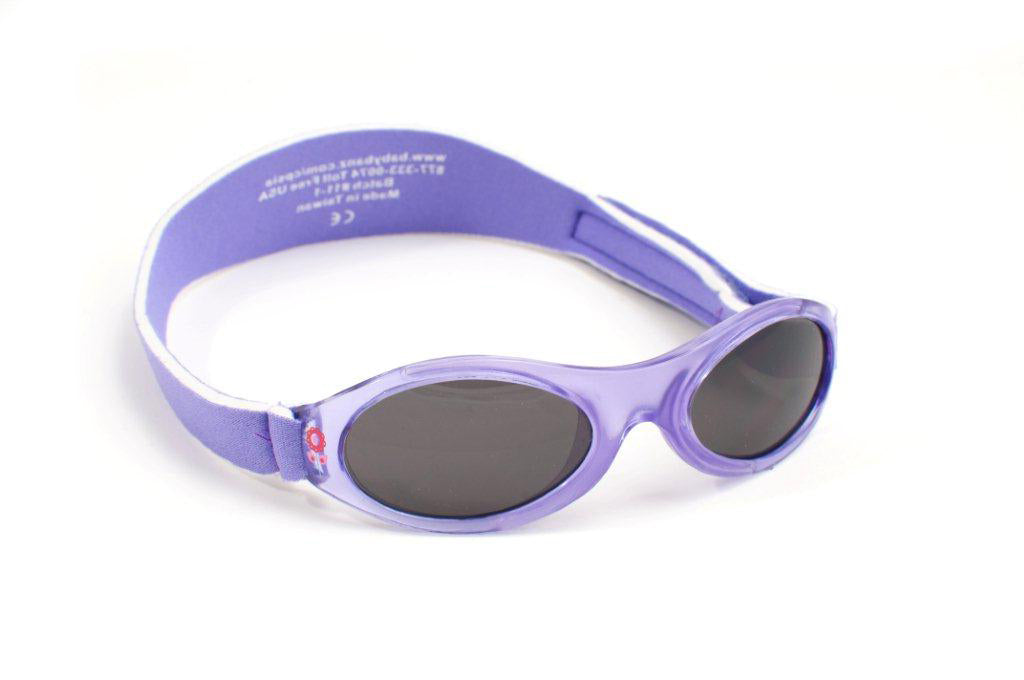
- Wraparound coverage to block glare and dust from the sides, not just the front.
- Secure straps for toddlers and babies, since a pair that slides off gets lost or, worse, chewed on.
- Flexible, lightweight frames that bend without snapping when a toddler sits on them.
- A hard coat on the lens surface to resist scratches from sand and rough handling.
BANZ® walks through these exact fit and lens details in its guide to choosing toddler sunglasses with UV protection, which is worth a look before you shop if your child is under three.
Pro Tip: Test fit by having your child look down and shake their head gently. If the glasses slide or fall, size down or switch to a strap style before you leave the store.
For babies and younger toddlers especially, check the product page for a specific UV rating rather than assuming “sunglasses” automatically means UV400. Replace any pair with a scratched or hazy lens surface, since scratches scatter light and reduce the actual glare protection you paid for.
Why Children’s Eyewear Needs a Different Standard
Kids’ eyes let in more UV light than adult eyes because their lenses are still clear and developing, which is exactly why eye-care authorities treat sun protection as a baseline health measure rather than an accessory choice. The AAO’s sun protection guidance backs UV blocking as a core recommendation, not an optional add-on.
BANZ® builds around that standard. Every pair carries UPF 50+ rated protection, the free BANZ Protect app adds real-time UV monitoring so parents know when exposure is climbing, and the brand’s products are trusted by more than 2 million families across six continents. BANZ® also publishes a roundup of trusted UV-blocking sunglasses for children that walks through specific frame and lens combinations by age.
- Dedicated wrap-around styles built for small faces, not scaled-down adult frames.
- Combo sets that pair sunglasses with hearing protection for one purchase decision instead of two.
- A free monitoring app that adds ongoing UV awareness after the purchase, not just at checkout.
| Activity | Recommended pairing |
|---|---|
| Infants, everyday outdoor time | Wrap-around sunglasses + earmuffs combo set |
| Beach or pool days | Polarized sunglasses + UPF 50+ sun hat with toggle |
| Snow or high-altitude trips | Mirrored sunglasses + full-coverage hat |
Parents with specific fit or prescription questions can also reach out through BANZ®'s ask an expert page for direct guidance rather than guessing from a size chart.
The Perspective Most Buying Guides Miss
Most sunglasses articles treat mirrored vs. polarized as a style debate, and that framing does parents a disservice. The real question isn’t which lens looks cooler on a five-year-old. It’s which lens matches what that child actually does outside, and whether the frame will survive contact with a playground slide.
Conventional advice tends to oversell polarization as a universal upgrade. It’s excellent for water and road glare, but it does nothing extra against raw brightness on a snowfield, and it can annoy a kid trying to glance at a tablet screen in the back seat. Mirrored coatings get dismissed as purely cosmetic, when in bright-altitude or beach conditions they’re doing real optical work.
If you take one thing from this guide, make it this: UV400 first, activity second, mirror-versus-polarized third. Fit and impact resistance beat lens technology for anything short of direct sun and glare exposure. Get those priorities backwards and you’ll end up with a stylish pair of sunglasses that doesn’t actually solve the problem your child faces outside.
— Shari M. Murphy
Gear Up With BANZ® for Whatever the Day Brings
BANZ® is built specifically for kids, not adults in smaller frames, which means every pair accounts for smaller nose bridges, active play, and the UPF 50+ standard eye-care authorities recommend as a baseline. That focus is why families across six continents default to BANZ® instead of piecing together fit and protection from general sunglasses racks.
If your household splits time between the pool and the yard, the wrap-around sunglasses and earmuffs combo set covers both sun and noise protection in one order. Parents shopping for shade beyond eyewear can also check the UPF 50+ pocket sun hat for a full-coverage pairing on beach days. Browse the current lineup and pick the combination that matches your family’s next trip outside.