

TL;DR:
- Kids’ sunglasses with UV400 protection and impact-resistant lenses provide essential eye safety during outdoor activities. Flexible, wraparound frames with secure retention are ideal for children of all ages to ensure proper fit and maximum coverage. Parents should prioritize verified UV protection over style, ensuring sunglasses are durable, properly fitted, and compliant with safety standards.
For reliable UV protection, choose BANZ flexible kids’ sunglasses first. They deliver UV400 coverage, flexible BPA-free frames, and a wrap fit that keeps light from sneaking in at the sides. For parents who want a quick shortlist, here are the top picks by age and activity:
- Babies and toddlers: BANZ (flexible wrap fit, soft strap retention) or Jan & Jul (soft frames, strap-compatible)
- Active kids and sports: Knockaround Kids Shirley Temples (UV400, polarized, FDA-compliant impact-resistant lenses) or Julbo (performance optics)
- Everyday value: Real Shades or RIVBOS for budget-conscious daily wear
The two specs that matter most: UV400 (blocks 100% of UVA and UVB rays) and impact-resistant lenses (polycarbonate, meeting ANSI standards). Dark lenses without a UV400 label offer no meaningful protection. Even on overcast days, UV exposure reaches children’s eyes, so UV400 is a non-negotiable starting point, not a premium upgrade.
| Brand | Best for | UV rating | Lens features | Impact resistance | Frame flexibility | Retention | Price range | Warranty |
|---|---|---|---|---|---|---|---|---|
| BANZ | Babies → active kids | UV400 | Non-polarized / mirrored options | Polycarbonate | Flexible, BPA-free | Strap + wrap | $20 | Replacement policy |
| Knockaround Kids | Ages 4–10, beach/water | UV400 | Polarized | FDA-compliant impact-resistant | Rigid colorful frames | Standard temples | ~$30 | Limited |
| Babiators | Toddlers, young kids | UV400 | Non-polarized | Impact-resistant | Flexible rubber | Strap available | $20–$30 | Lost/broken guarantee |
| Julbo | Sporty older kids/teens | UV400 | Polarized options | Polycarbonate | Semi-flexible | Wrap/strap | $60–$80 | Brand warranty |
| Jan & Jul | Babies, toddlers | UV400 | Non-polarized | Impact-resistant | Soft flexible | Strap | $15 | Limited |
| RIVBOS | Budget buyers | UV400 (some models) | Non-polarized | Basic impact | Flexible | Strap | ~$20 | — |
Table of Contents
- What are the best UV-blocking sunglasses for kids right now?
- How do you choose the right UV-blocking sunglasses for children?
- How these picks were chosen
- Key Takeaways
- Why protecting children’s eyes outdoors starts with the right fit
- BANZ flexible kids’ sunglasses: ready to use now
- What’s the editorial take on kids’ sunglasses?
- Useful sources and further reading
What are the best UV-blocking sunglasses for kids right now?
The brands below cover every age from infants to teens. Specs are drawn from product pages and published testing; where a spec is not publicly listed, that’s noted.
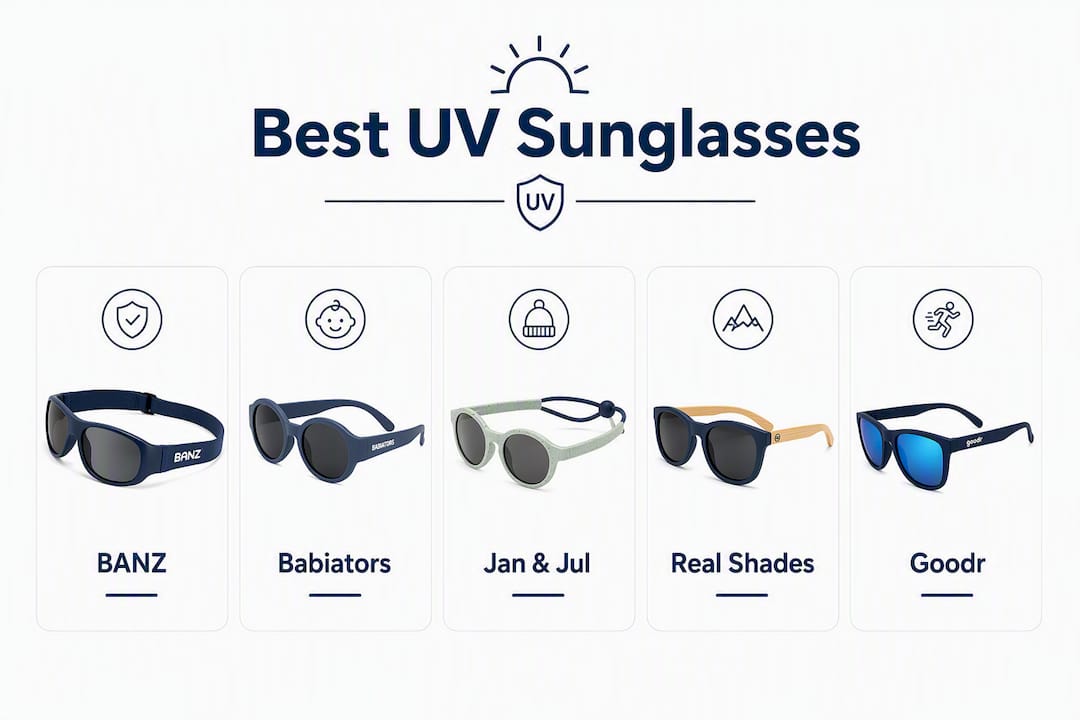
BANZ Kids Wrap / Flexible Sunglasses are the strongest all-around pick for babies through active school-age kids. The frames are flexible and BPA-free, the fit is a close wrap that limits side-entry light, and retention straps keep them on during play. UV400 protection is confirmed across the range. BANZ is a widely used brand with a presence across multiple continents, and the free BANZ Protect app adds real-time UV monitoring for parents who want an extra layer of oversight.
Babiators organize their lineup by age group, which makes sizing straightforward. Frames are flexible rubber, lenses are impact-resistant, and the brand’s lost/broken guarantee is one of the more parent-friendly warranty policies in this category. UV400 is standard across their children’s line.
Jan & Jul specialize in the baby and toddler window. Soft frames and strap-compatible designs mean the glasses stay put without pressure points on small faces. UV400 protection is confirmed; polarization is not a feature of most models, which is fine since glare reduction is secondary to UV blocking at this age.
Real Shades cover everyday school and casual wear with simple, reliable UV400 protection. Nothing flashy, but consistent specs and accessible pricing make them a practical daily-driver for younger kids.
Knockaround Kids Shirley Temples bring UV400 polarized lenses and FDA-compliant impact resistance to the 4–10 age range. The polarization is genuinely useful at the beach or on water, and the bright colorways tend to get kids excited about wearing them.
Goodr targets older kids and teens with sporty frames and a secure fit. Affordable pricing and bold colors make them popular for running, cycling, and field sports.
Julbo is the performance pick. Their lens technology (including Reactiv photochromic options on some models) suits kids who spend serious time outdoors in variable light. Polycarbonate lenses and semi-flexible frames hold up to rough use.
MiniShades address the infant gap with tiny sizes and simple retention. Specs vary by model; verify UV400 labeling before purchasing.
Leosun offers flexible frames at budget prices for babies and toddlers. Some models meet UV400; check the label on the specific model, as the range is inconsistent.
Monsoon sits at the very low end of the price scale. Style is the main draw; UV claims should be verified independently before relying on these for extended outdoor use.
Bling2o targets tweens and teens with fashion-forward designs. UV specs vary by model. Confirm UV400 on the specific pair before buying.
Jojo Maman Bebe offers comfortable classic shapes for younger kids. A British brand with U.S. availability; UV400 on most children’s models.
Izipizi brings designer colorways and clean sizing to older kids who care about aesthetics. UV protection is confirmed on their children’s range.
M&S (Marks & Spencer) provides accessible retail pricing for occasional-use pairs. Verify UV400 labeling; not all budget retail models carry the spec.
RIVBOS occasionally surprises at its price point. Some models deliver reasonable fit and UV400 protection under $18, making them a viable backup pair. Durability is modest.
Pit Viper suits older kids and teens who want a bold, oversized sports look. Durable frames and large coverage area; UV specs are confirmed on their standard lens options.
Pro Tip: Buying a second pair at a lower price point (RIVBOS, Real Shades) for school or daycare makes sense. Save the better-spec pair (BANZ, Knockaround, Julbo) for extended outdoor time.
How do you choose the right UV-blocking sunglasses for children?
The must-have checklist
- UV400 / 100% UVA+UVB blocking. This is the only spec that determines actual eye protection. A label reading “UV resistant” or “blocks harmful rays” without a UV400 or percentage disclosure is not sufficient.
- Impact-resistant lenses. Polycarbonate lenses resist shattering. Look for ANSI Z80.3 or ASTM compliance for U.S.-sold eyewear.
- Close-fit or wrap design. Wraparound frames minimize side-entry UV; standard flat frames let light in from the sides and above.
- Flexible, BPA-free frames for babies and toddlers. Rigid frames can snap and create sharp edges.
- Retention strap or secure temple fit for active kids and toddlers who won’t keep glasses on without one.
Sizing by age
- Infants (0–12 months): Look for soft, strap-only designs. Lens width around 40–44mm. Jan & Jul and MiniShades are sized for this window. BANZ also covers this range with strap-compatible options.
- Toddlers (1–3 years): Lens width 44–48mm. Flexible frames are critical here. Choosing toddler sunglasses with a strap keeps them on during active play.
- Little kids (4–8 years): Lens width 48–52mm. Wrap styles work well. This is the sweet spot for BANZ flexible wraps and Knockaround Kids.
- Older kids and teens (9+): Standard adult-small or youth sizing. Goodr, Julbo, and Pit Viper all fit this range.
Polarization vs. UV protection
Polarization reduces glare but does not increase UV attenuation. A polarized lens without UV400 labeling still lets UV radiation through. Polarization is worth having for beach, water, and snow activities where reflected glare is intense. For everyday wear, UV400 matters far more.
Price bands and what they buy
Mid-range ($30–$50) sunglasses typically offer the best balance of verified UV protection, durable materials, and warranty coverage. Budget pairs around $20 can meet protection specs, but many cheap options skip UV400 labeling or impact standards entirely. Premium pairs above $60 (Julbo, some Goodr) add performance optics and better durability for kids in demanding outdoor sports.
Red flags to avoid
- Dark lenses with no UV400 or percentage claim
- “UV resistant” labeling without a specific standard
- No warranty, return policy, or replacement program
- Inflexible, brittle frames for children under 5
- No stated lens material (polycarbonate vs. standard plastic)
How these picks were chosen
Every product on this list was evaluated against six axes: UV spec (UV400 / 100% UVA+UVB confirmed), impact resistance (polycarbonate lens material and/or ANSI/ASTM compliance), frame durability and flexibility, retention options, age-appropriate fit, and price-to-warranty value. Where a brand’s product page did not confirm a spec, that gap is noted in the entry rather than assumed.
“I recommend nothing short of 100% UVA/UVB protection for children. Wraparound styles are preferable because they minimize the amount of UV light that can enter from the sides.”
— Dr. Darius M. Moshfeghi, as cited by Travel + Leisure
That guidance shaped the shortlist directly. Any pair without confirmed UV400 was excluded from the top picks, regardless of price or brand recognition. For U.S. shoppers, ANSI Z80.3 is the relevant impact standard for sunglasses; ASTM F803 applies to sports eyewear. Neither standard is federally mandated for children’s sunglasses sold in the U.S., so checking the label yourself remains the most reliable verification step.
Brand claims were treated as unverified until a product page, published test, or third-party review confirmed the spec. Pairs where UV claims were vague or unverifiable (Monsoon, some Leosun models) are flagged accordingly.
Key Takeaways
UV400 protection combined with impact-resistant polycarbonate lenses and a secure wrap fit gives children the most complete eye protection available in a standard kids’ sunglass.
| Point | Details |
|---|---|
| UV400 is the baseline | Only buy sunglasses labeled UV400 or 100% UVA/UVB; “UV resistant” without a standard is not enough. |
| Fit and retention matter | Wrap designs and adjustable straps keep glasses on and block side-entry UV, especially for toddlers. |
| Material durability counts | Polycarbonate lenses and flexible BPA-free frames resist shattering and survive daily child use. |
| Mid-range hits the sweet spot | The $30–$50 price band typically delivers verified UV protection, durable frames, and a usable warranty. |
| BANZ for kid-focused fit | BANZ flexible wrap sunglasses cover babies through active school-age kids with confirmed UV400 and BPA-free frames. |
Why protecting children’s eyes outdoors starts with the right fit
Most parents focus on sunscreen and forget that children’s eyes are more vulnerable to UV damage than adult eyes. The lens of a child’s eye transmits significantly more UV radiation to the retina, which is why sun-safe habits established early reduce lifetime risk of cataracts and other UV-related conditions. BANZ was built around exactly this problem. The brand started when a family couldn’t find adequate protection gear for their own children and decided to make it themselves. That origin shapes the product line: kid-specific sizing, flexible frames that survive rough use, and UV400 coverage confirmed across the range.
The free BANZ Protect app extends that protection by giving parents real-time UV index readings, so you know when conditions call for sunglasses even if the sky looks overcast. For parents who want to go deeper on the science, BANZ’s UV safety resources hub covers UV index interpretation, age-specific risk, and how to layer sun protection effectively.
BANZ flexible kids’ sunglasses: ready to use now
BANZ flexible wrap sunglasses give children UV400 protection in a frame built for how kids actually move. BPA-free flexible frames, polycarbonate lenses, and strap retention options cover babies through active school-age kids in one product line. No guesswork on UV specs; no brittle frames that snap on the first drop.
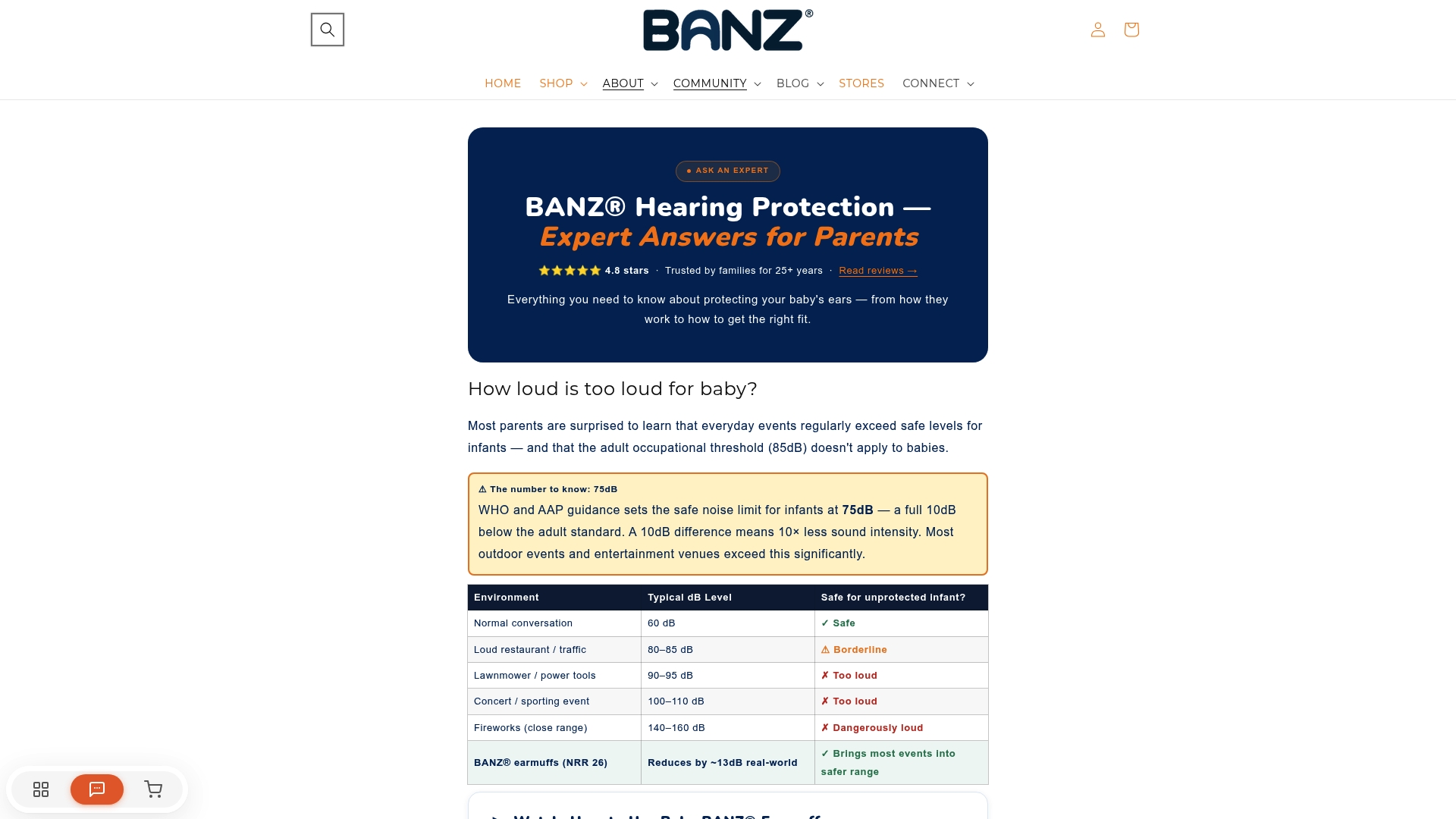
Parents who want a verified, kid-fit UV solution can browse the full range and check sizing at usa.banzworld.com. BANZ also publishes a UV eye protection resource for parents who want clinical-level detail before buying. Check current availability and sizing on the product page.
What’s the editorial take on kids’ sunglasses?
The biggest mistake parents make is treating UV protection as a premium feature rather than a baseline requirement. A $12 pair with no UV400 label does more harm than good because it causes pupils to dilate behind a dark lens, letting in more UV than no glasses at all. The spec is free to include; brands that omit it are making a choice.
The second mistake is buying for style and hoping the fit works out. A stylish pair that sits away from the face, lets light in at the temples, or falls off every five minutes provides far less protection than a plain wrap that stays put. Fit is the delivery mechanism for whatever UV spec the lens carries.
Involving kids in the selection process genuinely helps compliance. When a child picks the color or style, they’re more likely to keep the glasses on. That’s not a soft parenting tip; ophthalmologists and product testers both report measurably higher wear rates when kids have some ownership of the choice. Buy the right spec first, then let them pick from that shortlist.
Useful sources and further reading
- Sunglasses and sun protection for children’s eyes — My Kids Vision: clinical overview of UV risk and lens standards for children
- The 13 Best Sunglasses for Kids, Tested and Reviewed — Travel + Leisure: hands-on testing and Dr. Moshfeghi’s UV guidance
- 9 best sunglasses for kids, tested to protect little eyes from UV rays — Newswav: expert notes on UV exposure and Category 3 lens recommendations
- Knockaround Kids Shirley Temples product page — UV400, polarization, and FDA impact compliance specs
- How UV exposure affects toddler eyes — BANZ: developmental vulnerability and age-specific risk
- UV safety resources for kids — BANZ: UV index guide and sun protection layering for families
- Ask an expert — BANZ: personalized guidance for parents with specific protection questions
This article is general information, not medical advice. Consult a pediatric eye care professional for guidance specific to your child’s needs.
