

Every family beach day needs these non-negotiables: a shade shelter (umbrella or pop-up tent), broad-spectrum SPF 30+ sunscreen, UPF-rated clothing and hats, a filled cooler with water and snacks, towels or a blanket, a compact first-aid kit, and all infant or toddler basics (diapers, swim diapers, wipes, changing pad). Pack those seven categories and the day works. Miss one and you’re driving to a CVS in wet sandals.
Quick-scan family beach checklist:
- Shade & seating: umbrella or pop-up tent, beach chairs or blanket
- Sun protection: SPF 30+ sunscreen, UPF rashguards, wide-brim hats, kids’ sunglasses
- Clothing: multiple swimsuits per person, cover-ups, a light layer for evenings
- Cooler & food: insulated cooler, ice packs, water bottles, snacks, formula/bottles for infants
- Towels & bags: beach towels, mesh bag, wet bag for swimwear
- First aid: bandages, antiseptic wipes, sting relief, child-specific medications
- Infant/toddler basics: diapers, swim diapers, wipes, portable changing pad, baby sunscreen
- Entertainment: sand toys, small buckets, shovels, car-ride activities
BabyCenter’s printable family beach checklist breaks this down by family member so you can check off items per person before you leave the house.
Key Takeaways
A complete family beach packing list comes down to seven non-negotiable categories: shade, sun protection, UPF clothing, a stocked cooler, towels, first aid, and infant or toddler basics.
| Point | Details |
|---|---|
| Seven core categories | Shade, sunscreen, UPF clothing, cooler, towels, first aid, and infant basics cover every trip-ending scenario. |
| Infant and toddler priority | Swim diapers, a portable changing pad, mineral sunscreen, and a Coast Guard-approved life jacket are non-negotiable for children under 3. |
| Sun protection standard | Broad-spectrum SPF 30+ sunscreen plus UPF 50+ clothing; reapply sunscreen every two hours and after swimming. |
| Post-beach prep | Pack wet bags, a portable rinse source, and a dry change of clothes per person stored in the car, not the beach bag. |
| BANZ for sun and noise | BANZ UPF 50+ gear and NRR 26dB earmuffs address the two most underpacked protection categories for kids at the beach. |
Table of Contents
- What does every family need at the beach?
- How do you protect your family from the sun at the beach?
- What should you pack for infants and toddlers at the beach?
- What goes in a family beach first-aid kit?
- What food and drinks should you pack for a beach day?
- What keeps kids entertained on the way to the beach and while there?
- What are the best optional upgrades for a family beach trip?
- How do you pack efficiently for a family beach trip?
- What do families most often forget to pack for the beach?
- Why do kids need child-specific sun and hearing protection at the beach?
- What should young kids and teens pack differently?
- How do you manage wet and dirty clothes at the beach?
- What do you need for post-beach cleanup and comfort?
- What the packing list gets wrong most of the time
- BANZ gear that covers the two things parents forget most
- Sources
What does every family need at the beach?
The core gear falls into seven categories. Get these right and everything else is optional.
- Shade: A 7-foot beach umbrella covers two adults and a stroller. Families with infants or multiple small children do better with a pop-up tent, which blocks wind and gives a crawling baby a contained, shaded floor.
- Seating: Low-profile beach chairs for adults, a blanket or sand-free mat for kids to sit and play.
- Towels: Pack one per person plus one spare. Microfiber towels dry faster and compress smaller than cotton.
- Cooler: A soft-sided insulated bag works for a day trip. For a week-long stay, check what your rental supplies before hauling a hard cooler from home.
- Bags: A mesh bag lets sand fall through on the way back. A separate waterproof tote keeps phones, keys, and dry clothes protected.
- Waterproof phone pouch: Attach it to a bag strap. Replacing a water-damaged phone mid-vacation is expensive and avoidable.
Packing order matters. Load the cooler and umbrella last into the car so they come out first at the beach. Put the first-aid kit and sunscreen at the top of the beach bag, not buried under towels.
Pro Tip: A beach wagon or wheeled cart changes the whole carry-in. Load it with the cooler, umbrella, and bag, and you free both hands for kids. It also doubles as a shaded nap spot for toddlers if you drape a towel over the handle.
How do you protect your family from the sun at the beach?
Sand reflects up to 15% of UV radiation back at you, and water reflects even more, which means UV exposure at the beach is higher than most parents expect. The EPA and CDC both recommend broad-spectrum SPF 30 or higher, reapplied every two hours and immediately after swimming.
Sun safety stat: The EPA notes that UV exposure is one of the leading causes of preventable skin damage in children, and that protection habits formed early reduce lifetime risk significantly.
What to pack:
- Broad-spectrum SPF 30+ sunscreen (lotion for faces, spray for body coverage on squirmy kids)
- UPF 50+ rashguards and swim shirts for every child
- Wide-brim hats with chin straps for toddlers (chin straps keep them on)
- UV-blocking sunglasses for kids
- Light cover-ups or long-sleeve layers for late afternoon
- Multiple swimsuits per person so one can dry while the other is worn
Packable UPF layers designed for active kids reduce how often you need to reapply sunscreen, since the fabric does the blocking. For a full breakdown of hat selection, the BANZ sun hat guide covers fit, brim width, and what to look for by age.
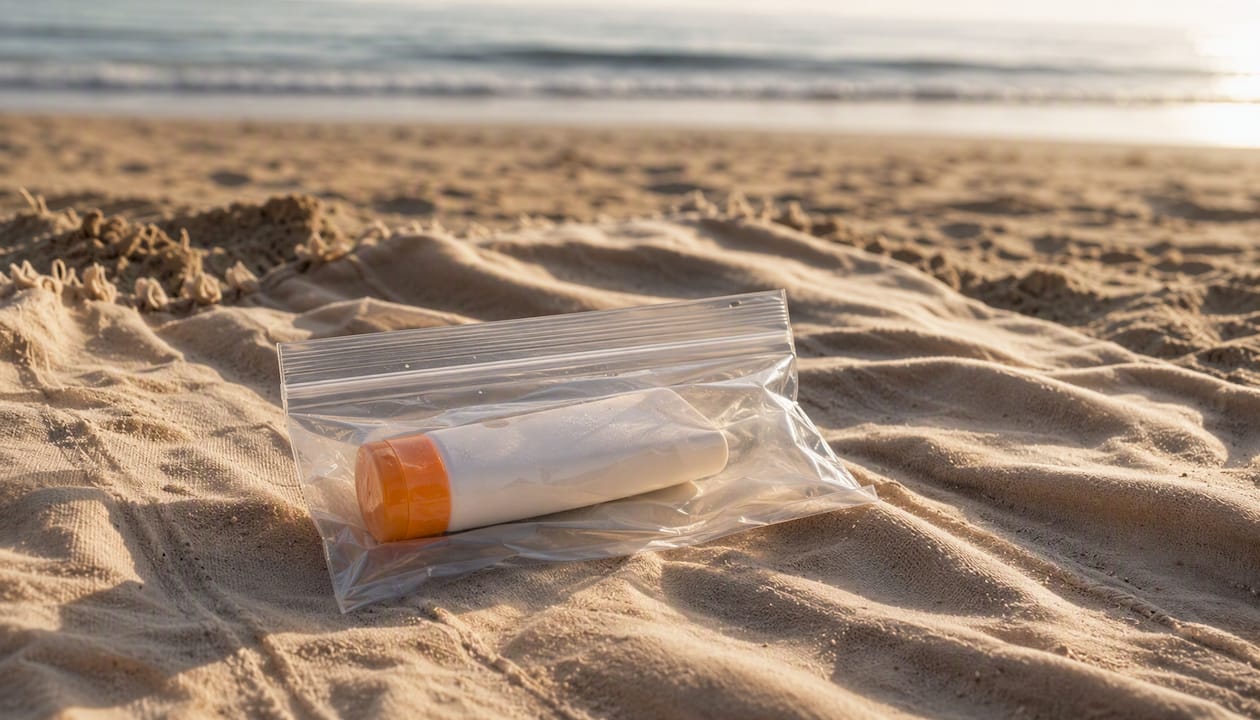
Pack sunscreen in a zip-lock bag. It leaks in heat, and a sunscreen-soaked beach bag is a problem you only make once.
What should you pack for infants and toddlers at the beach?
The infant and toddler checklist is where most parents underpack. BabyCenter’s beach packing list flags swim diapers, shade options, and a compact first-aid kit as important items parents often forget.
Newborns (0–6 months)
Newborns have almost no melanin and should stay out of direct sun entirely. Keep them in a pop-up tent or under a UV-blocking canopy.
- UPF 50+ full-coverage outfit or onesie
- Wide-brim hat with chin strap
- Mineral-based sunscreen (check with your pediatrician before applying to skin under 6 months)
- Portable changing pad
- Diapers: enough to cover frequent changes for a full day
- Wipes, diaper cream, zip-lock bag for dirty diapers
- Formula, pre-measured in containers, plus a bottle of water for mixing
- Insulated bottle bag
Infants (6–18 months)
- Swim diapers in sufficient quantity for a full day plus regular diapers for before and after water
- UPF 50+ rashguard and swim diaper set
- Wide-brim hat with chin strap
- Baby-safe mineral sunscreen (SPF 30+)
- Portable changing pad
- Wet/dry bag for soiled items
- Small snacks: puffs, pouches, soft fruit
- Coast Guard-approved infant life jacket if near open water
Toddlers (18–36 months)
- Swim diapers or training swim pants (pack 3–4 for a full day)
- Two-piece UPF rashguard set
- Water shoes (sand gets hot and shells are sharp)
- Wide-brim hat
- Sunglasses with UV protection
- Small sand toys: bucket, shovel, two or three molds
- Snacks in sealed containers
- Change of dry clothes
Pro Tip: Pack a small pop-up play yard for infants who are crawling. It gives them a sand-free, shaded zone to sit and play without you chasing them toward the water every 30 seconds.
For water safety, a Coast Guard-approved life jacket is the standard for any child near open water. Puddle jumpers are popular but are not Coast Guard-approved as life jackets. Check the label before you buy.
What goes in a family beach first-aid kit?
Keep it in a small waterproof pouch at the top of your bag.
- Adhesive bandages (assorted sizes)
- Antiseptic wipes
- Hydrocortisone cream (for jellyfish stings and rashes)
- Tweezers (for splinters and sea urchin spines)
- After-sun lotion or aloe vera gel
- Children’s pain reliever (ibuprofen or acetaminophen, age-appropriate dose)
- Any prescription medications your child takes
- Thermometer
- Antihistamine (liquid for young children)
- Insect repellent safe for children (DEET-free formulas for kids under 12, or picaridin-based)
For insect repellent, the CDC recommends products registered with the EPA for use on children. Apply it to clothing and exposed skin, but never to hands, eyes, or mouths. For children under 2 months, skip repellent entirely and use physical barriers.
Water safety reminders: swim only in designated areas with lifeguards on duty, keep life jackets on weak swimmers at all times in open water, and stay within arm’s reach of children under 5 near any water. The BANZ kids’ sun and safety resource library links directly to CDC and EPA child water-safety guidance.
What food and drinks should you pack for a beach day?
Heat and sand make food choices matter more than at a regular picnic. The goal: nothing that melts, nothing that attracts bees, and nothing that requires utensils a toddler will throw.
- Cooler: A soft-sided insulated cooler with two ice packs keeps food safe for 4–6 hours. For a family of four on a full day, a 20–30 quart size is sufficient.
- Water: One 16 oz bottle per person per hour in hot weather is a reasonable baseline. Bring more than you think you need.
- Snacks that travel well: pre-cut grapes in a sealed container, applesauce pouches, bagels, cheese sticks, crackers, and sliced strawberries. BabyCenter recommends packing snacks in containers that seal tightly to avoid what they call “sand trap” snacks.
- Infant formula: Pre-measure powder into individual containers. Bring a separate bottle of water for mixing. Keep mixed formula in the cooler and use within one hour of preparation.
- Sippy cups and bottles: Insulated stainless steel keeps drinks cold longer than plastic.
- Hand sanitizer and baby wipes: Use before every snack. Sand plus food plus hands is a fast route to a sick kid.
Avoid chips, crackers in open bags, and anything sticky. They attract insects and coat everything in crumbs. Sealed containers are worth the extra packing space.
What keeps kids entertained on the way to the beach and while there?
The car ride and the first 20 minutes of setup are when meltdowns happen. Pack for both.
At the beach:
- Small bucket, shovel, and two or three sand molds (cookie cutters work perfectly)
- A mesh bag to carry toys in and rinse them off
- Inflatable beach ball or ring toss
- Boogie board for kids 5 and up
- For eco-conscious families, sustainable bath and beach toys made from natural materials hold up well in sand and salt water
For the car ride:
- Downloaded movies or shows on a tablet (no relying on beach-town Wi-Fi)
- Headphones or kids’ earmuffs for noise-sensitive children
- Motion-sickness aids: ginger chews for older kids, or ask your pediatrician about children’s Dramamine for longer drives
- Small quiet toys: sticker books, magnetic drawing boards, card games
- A charger and a car adapter
Pro Tip: Pack a small drawstring bag as a “day bag” for the car. Put snacks, sunscreen, a change of clothes, and a water bottle in it. When you arrive, grab the day bag first. You can set up the umbrella and chairs while the kids are already eating and playing.
What are the best optional upgrades for a family beach trip?
These items are not required, but they make a real difference on longer trips or with younger children.
- Beach wagon or cart: Hauls all your gear in one trip. Worth it for families with two or more kids.
- Pop-up tent: More coverage than an umbrella and gives infants a contained shaded space. Many family beach trip guides rank this as the single best upgrade for families with babies.
- Sand-free towel or blanket: Woven mesh or ripstop nylon construction lets sand shake off instead of embedding. Noticeably better than a standard beach towel for sitting areas.
- Portable battery-powered fan: Clips to a stroller or tent frame. Useful for infants who overheat quickly.
- Waterproof Bluetooth speaker: Low priority, but nice for long days.
How to decide what to leave behind: If you’re flying or have a small car, cut the list to items your youngest child needs most. A wagon matters more than a speaker. A pop-up tent matters more than a fan. For bulky items like beach chairs or large umbrellas, check whether your rental property supplies them or whether a local beach shop rents them by the day.
How do you pack efficiently for a family beach trip?
Two frameworks help parents pack without forgetting anything or overpacking.
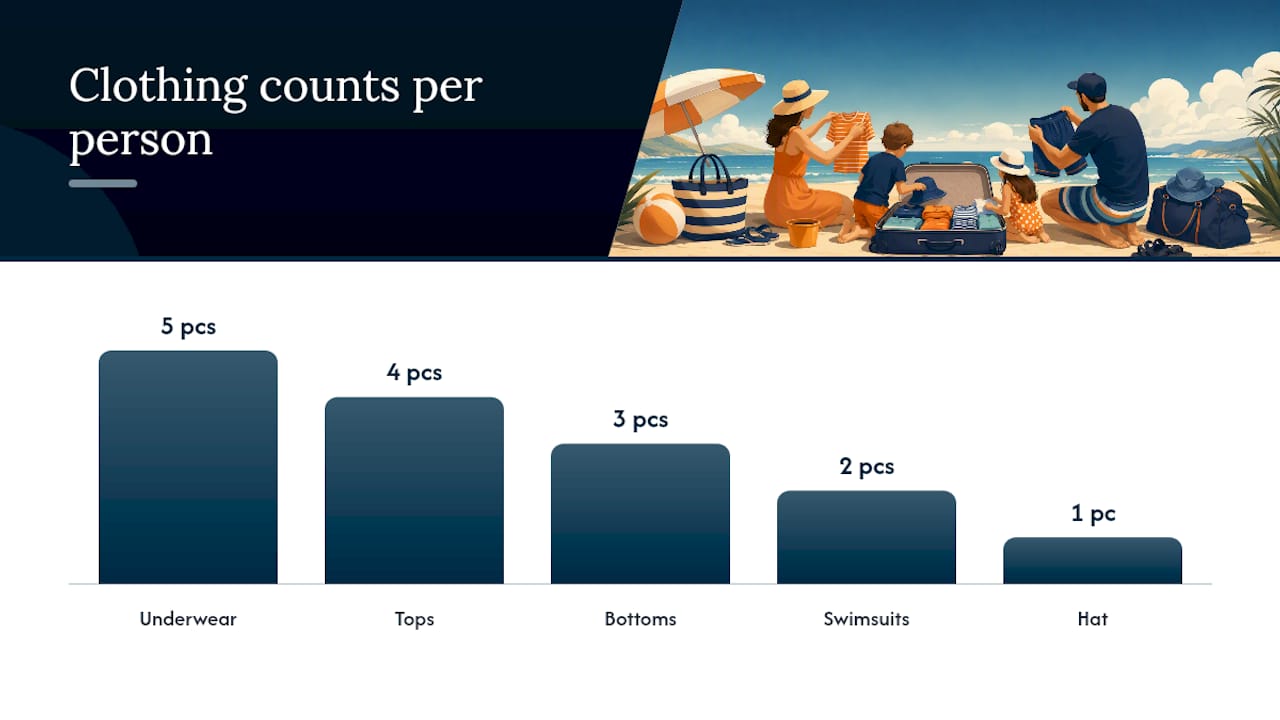
The 5-4-3-2-1 rule works well for clothing on longer trips: 5 pairs of underwear, 4 tops, 3 bottoms, 2 swimsuits, 1 hat. Adjust the swimsuit count up to two per person minimum, since wet suits are uncomfortable and take hours to dry in a beach bag.
The 3-3-3 rule applies to packing order: pack 3 days before (clothing, gear, toys), confirm 3 items the night before (sunscreen, first aid, snacks), and do a 3-point car check before leaving (shade, cooler, diapers/infant basics).
Pre-trip timeline:
- 3 days before: Wash and pack swimwear, UPF clothing, and beach towels. Check that sunscreen hasn’t expired.
- Night before: Pack the cooler with non-perishables. Lay out the beach bag with sunscreen, first aid, and hats on top. Charge all devices. Pre-measure formula.
- Morning of: Add perishables to the cooler. Do a final sweep: keys, phone, wallet, diapers, sunscreen. Load the car with the cooler and umbrella last so they come out first.
- At the car: Count heads, confirm the shade shelter is loaded, and check that the first-aid kit is accessible.
For week-long stays, The Everymom’s beach packing guide recommends checking your rental’s supply list before packing. Most beach houses provide beach chairs, umbrellas, and sometimes boogie boards. Packing duplicates wastes car space.
What do families most often forget to pack for the beach?
These items appear on almost every “wish I’d brought this” list.
- Baby powder: Sprinkle it on sandy skin before toweling off. The sand releases immediately. One of the most useful beach hacks from parent blogs.
- Spare swim diapers: One blowout and you’re done for the day without a backup.
- Extra hat: Kids lose hats. Pack a second one.
- Lip balm with SPF: Lips burn fast and nobody thinks to pack this.
- Cash: Parking meters and beach-town snack stands often don’t take cards.
- Trash bags: Bring two. One for garbage, one for wet/sandy gear.
- Phone charger and car adapter: Devices die faster in heat.
- After-sun lotion: You’ll want it at the end of the day even with good sunscreen coverage.
Quick fixes if you forget something:
- No shade: buy a cheap umbrella at a beach shop or use a large towel draped over two chairs.
- No baby powder: let sand dry completely before brushing off, then use a dry towel.
- No swim diapers: most beach towns have a pharmacy or grocery store within a few minutes.
- No sunscreen: every beach town convenience store carries it. Buy it, don’t skip it.
Why do kids need child-specific sun and hearing protection at the beach?
Young skin burns faster and at lower UV levels than adult skin. Children’s eyes are also more susceptible to UV damage because their lenses are clearer, allowing more radiation to reach the retina. At the same time, beaches are loud environments: waves, crowds, and music can reach levels that cause discomfort or fatigue in children with noise sensitivity.
Child-specific products address both problems in ways that adult gear doesn’t.
- UPF 50+ clothing blocks more than 98% of UV rays and removes the need to reapply sunscreen to covered areas. Packable UPF layers for kids are designed to stay on during active play, which is where standard sunscreen fails.
- Properly fitted kids’ sunglasses with UV400 lenses protect developing eyes. Adult sunglasses slip off and don’t wrap correctly around a child’s face.
- Pediatric earmuffs with a rated noise reduction value protect children who are noise-sensitive or who simply need a quieter environment to nap or stay calm on a crowded beach.
BANZ has reached over 2 million families across six continents with UPF 50+ sun gear and NRR 26dB hearing protection earmuffs designed specifically for children. The free BANZ Protect app provides real-time UV and noise monitoring so parents can make informed decisions about when to add a layer or move to shade.
For parents who want to go deeper on UV risk at the beach specifically, the BANZ guide on beach UV exposure explains why reflective surfaces like sand and water amplify UV levels beyond what the UV index alone suggests. The outdoor sun safety gear guide for kids covers product selection by activity type.
What should young kids and teens pack differently?
Infants and toddlers get the most attention in beach packing guides, but older children have their own checklist gaps.
Young kids (ages 4–8)
- Water shoes (they run on hot sand and rocky shores without thinking)
- Their own small backpack with their name on it (reduces “I lost it” incidents)
- Boogie board or foam kickboard
- Goggles (kids this age spend most of the trip underwater)
- Extra snacks beyond what you’d pack for adults
- Waterproof watch or a simple way to track time in the water
- Rash guards for beyond-the-pool use, since kids this age play in and out of the water all day
Tweens and teens (ages 9–17)
- Their own sunscreen (and the expectation that they apply it themselves, with a parent check)
- Waterproof phone case or dry bag for their device
- Earbuds or headphones
- A book, magazine, or downloaded content for downtime
- Spending money for beach-town snacks or souvenirs
- A separate towel from the family pile (they will claim the best one otherwise)
Teens often resist hats and rashguards. The BANZ UV protection guide makes the case for UV-protective clothing in terms teens respond to: it keeps them cooler than sunscreen alone and means fewer reapplication interruptions during the day.
How do you manage wet and dirty clothes at the beach?
Wet swimwear and sandy clothes are the most disorganized part of any beach day if you don’t plan for them.
Pack two or three wet bags (also called dry bags or waterproof pouches) in different sizes. A large one holds wet swimsuits and towels for the drive home. A small one clips to the stroller or beach bag for soiled diapers and wipes. Kibou’s toddler beach checklist specifically recommends keeping a waterproof bag for wet items as a non-negotiable, not a nice-to-have.
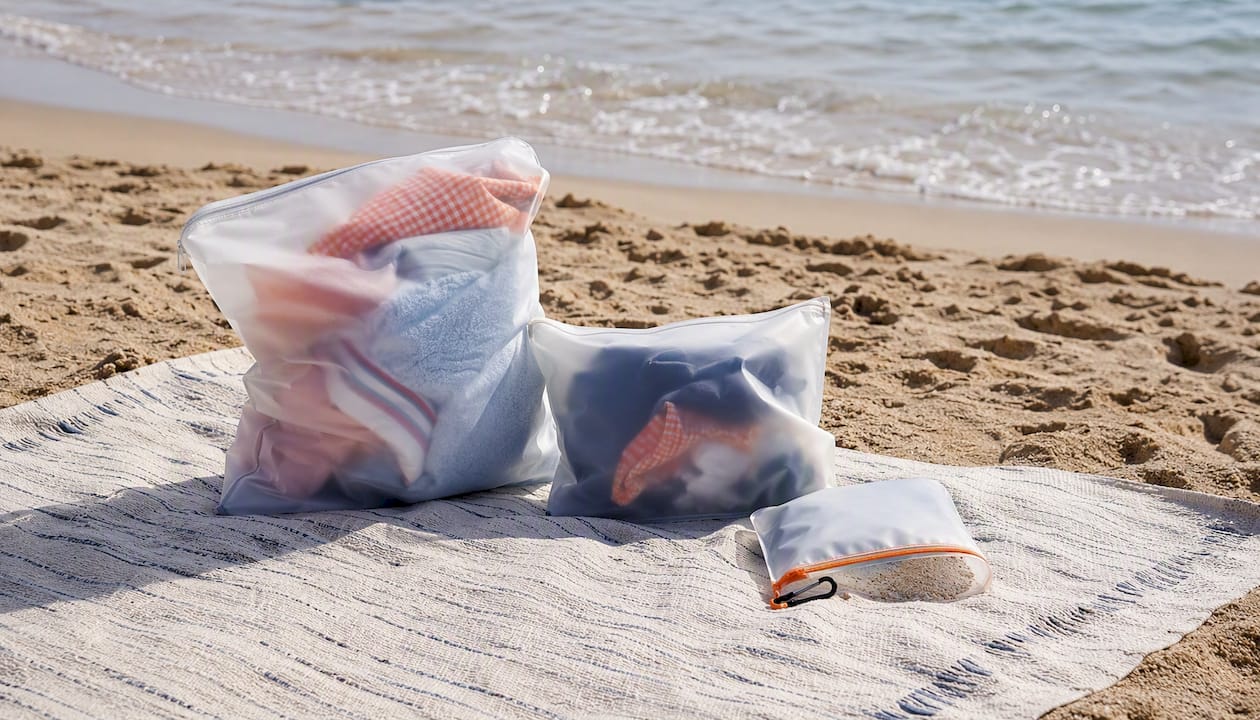
For clothing, the rule is simple: wet goes in a bag, dry stays out. Never mix them in the same compartment of a beach bag. Mildew sets in fast in a hot car, and a bag full of damp towels and dry clothes is a laundry problem by the time you get home.
Rinse swimwear in fresh water before bagging it when possible. Salt and chlorine break down elastic faster than washing does. A quick rinse at a beach shower or with a water bottle extends the life of rashguards and swimsuits noticeably.
For sandy clothes, shake them out before they go in the bag. Sand that dries in fabric is much easier to remove than wet sand that has bonded to fibers.
What do you need for post-beach cleanup and comfort?
The last 30 minutes of a beach day are often the most chaotic. A few items make the transition from beach to car much smoother.
- Changing towels or hooded towels: Kids change faster and stay warmer with a towel that wraps around them. Hooded versions are especially useful for toddlers who resist getting dressed.
- Portable outdoor shower or large water jug with a spigot: Rinse feet and legs before getting in the car. Sand in car seats is a week-long problem.
- Wet bags: One large bag for all wet swimwear and towels, one small bag for dirty diapers and wipes.
- Dry change of clothes for every family member: Pack these in a separate bag that stays in the car, not in the beach bag. They stay dry and clean that way.
- Flip-flops or sandals for the walk back: Hot pavement between the beach and the parking lot burns bare feet.
- Trash bags: Double as laundry bags for sandy gear.
- Hand sanitizer and baby wipes: For a quick cleanup before snacks on the drive home.
- After-sun lotion: Apply in the car or at the rental before showers. It reduces peeling and soothes skin that got more sun than expected.
For clothing and toiletry quantities on longer trips, packing a full change of clothes per beach day (not just per calendar day) is the standard recommendation for families with young children.
What the packing list gets wrong most of the time
Most family beach packing lists are organized by category, which is useful for shopping but not for packing. The real problem parents face isn’t knowing what to bring. It’s knowing what to prioritize when the bag is full and the car is packed and someone is already crying.
The items that matter most are the ones that prevent a trip-ending problem: no shade means sunburned kids and an early exit. No swim diapers means leaving the water entirely. No snacks means a meltdown at 11 AM. No first aid means a 20-minute drive to a pharmacy for a $4 bandage.
Everything else on the list is a comfort upgrade. A sand-free blanket is better than a regular towel. A beach wagon is better than four trips. A pop-up tent is better than an umbrella with a baby. But none of those items save the day. The non-negotiables do.
Pack the seven core categories first. Fill the remaining space with upgrades in order of your youngest child’s age. A family with a 4-month-old needs a portable shade shelter more than a Bluetooth speaker. A family with a 12-year-old needs goggles and a boogie board more than a portable changing pad.
The beach trip will be fine. Pack the basics, keep the cooler cold, and reapply sunscreen at noon.
BANZ gear that covers the two things parents forget most
Sun protection and noise management are the two categories most parents underpack for, and both have direct consequences for how long kids stay comfortable at the beach.
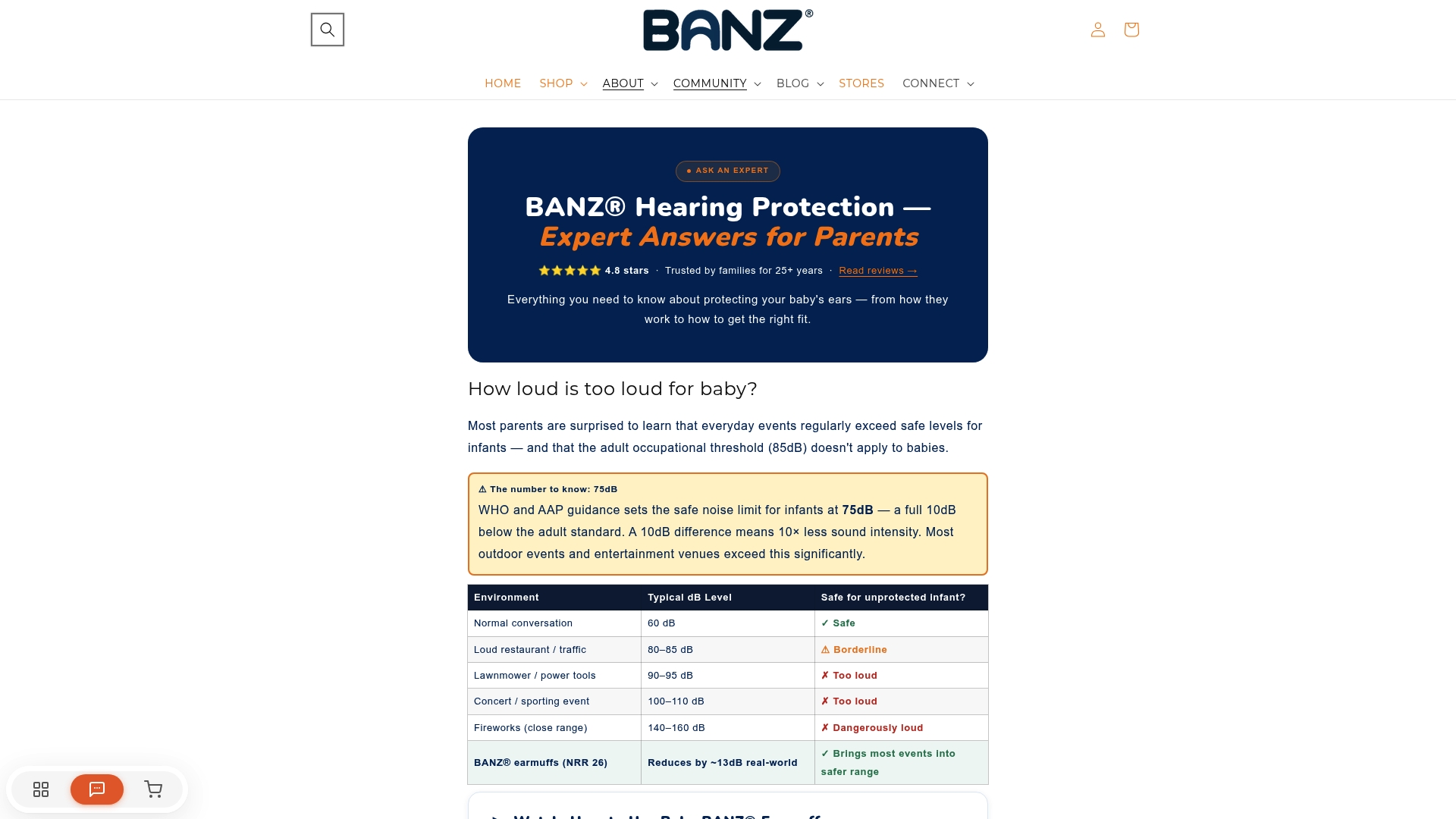
BANZ offers UPF 50+ sun hats, rashguards, and UV-blocking sunglasses designed specifically for children from infancy through school age. The earmuffs carry an NRR 26dB noise reduction rating, which is enough to take the edge off a crowded beach or a loud boardwalk for noise-sensitive kids. The free BANZ Protect app monitors real-time UV levels and ambient noise so you know when conditions have crossed into the range where protection matters.
Over 2 million families across six continents use BANZ products. Browse the full range and download the free kids’ sun and UV safety resources, including EPA and CDC guidance, at no cost. The printable family beach checklist from this article is also free to download and print.
Sources
- The ultimate beach packing list for parents who want a stress-free day on the water | BabyCenter
- Ultimate Lake or Beach Packing List for Families | Everymom
- Beach Packing List: What To Pack For Family Beach Vacation
- Family Beach Trip Packing List | LivingLesh
