

UV awareness is the daily practice of understanding ultraviolet radiation exposure and taking consistent steps to prevent cumulative skin damage. Skin cancer is the most common cancer in the US, with 1 in 5 Americans expected to develop it in their lifetime. UV radiation is the leading preventable risk factor behind that number. Knowing how UV awareness reduces long-term risk gives you a concrete reason to act now, not just on beach days, but every day your child steps outside.
How UV radiation causes cumulative damage over time
UV radiation splits into two types that harm skin in different ways. UVB rays cause sunburn and directly damage DNA in skin cells, which is the mechanism most closely linked to skin cancer. UVA rays penetrate deeper into the skin, driving premature aging, wrinkles, and immune suppression. Understanding types of UV radiation helps caregivers see why both types require daily attention.
The damage does not require a sunburn to accumulate. Repeated sub-erythemal UV exposure causes silent molecular changes that build up over years. Sub-erythemal means exposure below the threshold that causes visible redness. These invisible hits alter gene expression and accelerate epigenetic aging, which means your child’s skin can be aging at a molecular level without any visible sign of a burn.
Up to 90% of visible skin aging is caused by UV exposure. That figure reframes the conversation entirely. Wrinkles, uneven skin tone, and loss of elasticity are not just cosmetic concerns. They are markers of accumulated UV damage that began in childhood.
- UVB rays: Cause sunburn and direct DNA strand breaks linked to melanoma and squamous cell carcinoma
- UVA rays: Penetrate the dermis, break down collagen, suppress local immune responses, and accelerate skin aging
- Sub-erythemal exposure: Causes molecular damage without visible sunburn, accumulating silently across years of daily outdoor activity
- Epigenetic changes: UV exposure alters how genes are expressed, speeding up biological aging even in young skin
Pro Tip: Check the UV Index every morning using the free BANZ Protect app. Even on overcast days, UV levels can reach moderate or high, making protection necessary year-round.
What are the best UV protection practices for children?
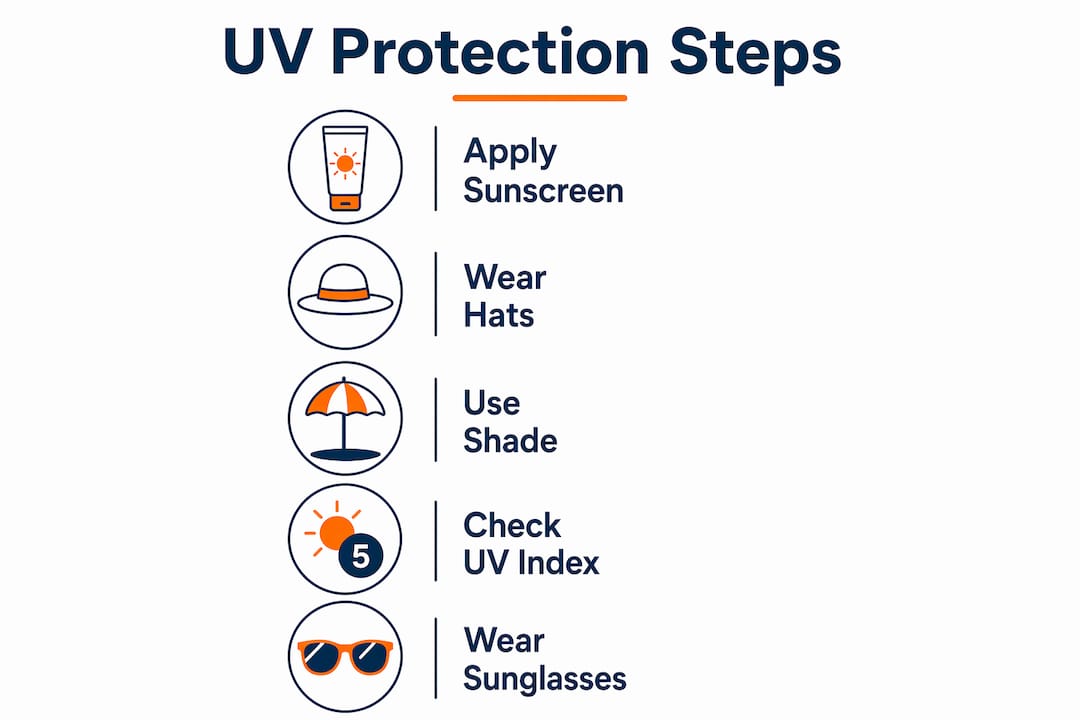
Consistent, layered protection is the most effective approach to preventing UV damage in children. No single method covers every angle of exposure, so combining strategies produces the best results.
- Apply broad-spectrum SPF 30+ sunscreen. SPF 30 blocks approximately 97% of UVB rays when applied correctly. Apply it 15–20 minutes before going outside and reapply every 2 hours, or immediately after swimming or sweating.
- Limit outdoor time during peak UV hours. UV rays are most intense between 10 a.m. and 4 p.m. Scheduling outdoor play before 10 a.m. or after 4 p.m. cuts peak exposure significantly.
- Use the UV Index as a daily decision tool. Dermatologists recommend taking protective measures when the UV Index reaches 3 or higher. The UV Index is more than a number. It is a practical health signal that shifts protection from reactive to proactive.
- Add physical barriers. Wide-brim hats, UV-protective clothing, and sunglasses block rays from multiple angles, including reflected UV from sand and water. A sun hat for UV protection can reduce facial UV exposure by more than half compared to no hat.
- Protect eyes as well as skin. UV exposure damages the cornea and lens over time, increasing the risk of cataracts. UV-blocking sunglasses or swim goggles are a necessary part of any complete protection plan.
Sunscreen works best as one layer within a broader protection strategy. Combining it with shade, timing, and physical barriers produces superior results compared to sunscreen alone. This layered approach is what separates reactive sun care from true UV awareness.
Pro Tip: Pack a sun safety checklist before any outdoor outing. Sunscreen, hat, UV-rated clothing, and sunglasses should be as automatic as buckling a car seat.
Common misconceptions about UV exposure that increase risk
Many caregivers underestimate UV risk because they rely on visible cues like sunshine, warmth, or skin redness. These cues are unreliable. UV radiation is invisible, and its damage is silent.
- Tanning is not healthy. A tan is the skin’s injury response. The body produces melanin to absorb further UV radiation after DNA damage has already occurred. There is no such thing as a safe base tan.
- Shade is not full protection. UV rays scatter and reflect off surfaces including sand, water, concrete, and snow. UV radiation reflects off surfaces and reaches skin even when a child is sitting under an umbrella or tree. Beach activities carry particularly high reflected UV exposure, which is why extra UV protection at the beach is necessary even in the shade.
- Windows do not block all UV. UVA rays pass through standard window glass. Children sitting near car windows or playing indoors near large windows still receive UVA exposure.
- Cloudy days are not safe days. Up to 80% of UV rays penetrate cloud cover. Overcast conditions reduce heat but not UV radiation meaningfully.
- Summer is not the only risk season. UV Index levels reach dangerous levels in spring and fall in many US regions. Snow reflects UV as effectively as sand, making winter outdoor activities a real exposure risk.
The gap between perceived and actual UV risk is where most long-term skin damage begins. Closing that gap is exactly what UV education and skin health programs are designed to do.
How childhood UV habits reduce future health burdens
UV exposure during childhood is a key predictor of later skin cancer risk. Most lifetime UV exposure accumulates before age 18, which means the habits caregivers build now directly shape a child’s long-term health outcomes.
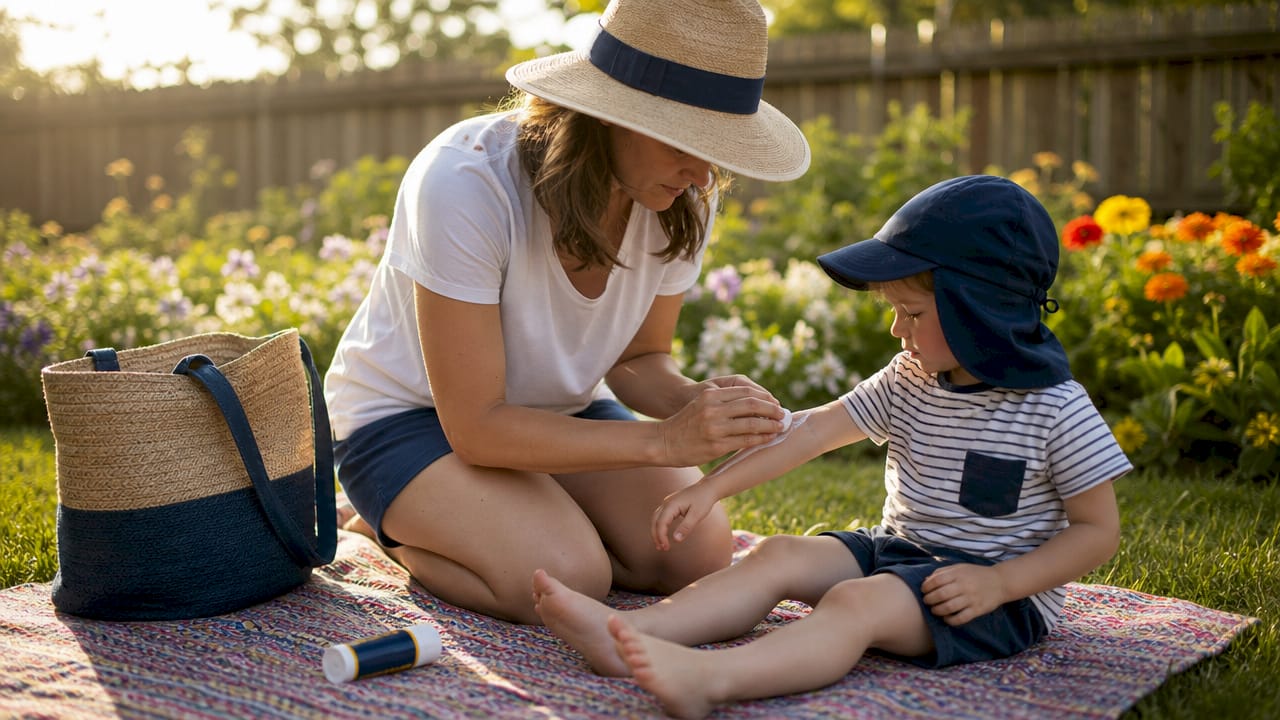
The evidence on early protection is clear. Consistent UV protection in childhood and adolescence significantly reduces the risk of squamous cell carcinoma and other UV-related skin cancers in adulthood. Caregivers who model sun safety behaviors increase the likelihood that children adopt those habits independently as they grow older.
Digital tools and sun awareness programs can increase universal sun protection behaviors by nearly 80%. That figure shows how access to real-time UV data changes behavior at scale. Apps that provide daily UV Index readings, like the free BANZ Protect app, give caregivers the information they need to make protection decisions before exposure happens.
| Protection habit | Long-term benefit |
|---|---|
| Daily SPF 30+ sunscreen use | Reduces UV-responsive gene expression changes and epigenetic age acceleration |
| Avoiding peak UV hours (10 a.m.–4 p.m.) | Cuts peak UVB exposure, lowering DNA damage risk |
| UV-protective clothing and hats | Reduces facial and body UV exposure from direct and reflected rays |
| UV Index monitoring | Shifts protection from seasonal to year-round, closing the awareness gap |
| Early childhood education | Increases lifelong adoption of sun safety habits through caregiver modeling |
Physical UV barriers like hats and UV-protective clothing add meaningfully to sunscreen’s benefits. They block rays from angles that sunscreen misses, especially reflected UV from ground surfaces. The combination of all five habits listed above represents the most complete approach to reducing skin cancer risk across a child’s lifetime.
Key takeaways
Consistent, layered UV protection starting in childhood is the most effective way to reduce long-term skin cancer risk, premature aging, and eye damage.
| Point | Details |
|---|---|
| UV damage accumulates silently | Sub-erythemal exposure causes molecular harm without visible sunburn, building risk over years. |
| SPF 30+ is the baseline | Broad-spectrum sunscreen blocks approximately 97% of UVB rays when reapplied every 2 hours. |
| Layered protection outperforms sunscreen alone | Combining sunscreen, hats, UV clothing, and timed outdoor activity produces superior results. |
| Childhood habits shape adult outcomes | Most lifetime UV exposure occurs before age 18, making early protection critical. |
| UV Index is a daily health tool | Taking protective action when the UV Index reaches 3 or higher reduces year-round exposure risk. |
Why I stopped treating sun protection as a summer task
I spent years thinking about sun protection the way most caregivers do: sunscreen at the beach, hats on vacation, and not much else in between. What changed my approach was learning about sub-erythemal damage. The idea that skin sustains molecular-level harm on an ordinary Tuesday in march, with no burn, no redness, and no warning, made the seasonal mindset feel genuinely inadequate.
The shift I made was practical, not dramatic. I started checking the UV Index every morning the same way I check the weather. When it hits 3, protection goes on. That habit alone changed how I thought about cloudy days, school drop-offs, and afternoon errands. None of those felt like “sun exposure” before. Now they do.
The other change was layering. I stopped relying on sunscreen as the whole answer. A wide-brim hat, UV-rated clothing, and timing outdoor play before 10 a.m. or after 4 p.m. all do work that sunscreen cannot. Outdoor sun safety gear for kids has improved significantly, and using it consistently is far easier than managing a sunburn or explaining a skin cancer diagnosis years later.
The most underrated part of this is modeling. Children watch what caregivers do. If you put on a hat before going outside, your child notices. If you check the UV Index before a park trip, that becomes normal. Small consistent actions build the habits that carry forward into adulthood, and that is where the real long-term risk reduction happens.
— Shari M. Murphy
BANZ® gear built for real UV protection
BANZ® was founded in Australia by a family who could not find adequate protection gear for their own children. That origin drives every product they make. BANZ® offers UPF 50+ sun protection gear and UV anti-fog swim goggles designed specifically for children’s outdoor activities, from pool days to playground afternoons.
The free BANZ Protect app delivers real-time UV Index readings so caregivers can make protection decisions before heading outside, not after. BANZ® products have reached over 2 million families across six continents. For caregivers building a complete sun safety routine, the Outdoor Hero bundle brings together the key protection layers in one place, making it straightforward to stay consistent every day.
FAQ
What does UV awareness mean for parents?
UV awareness means understanding when, how, and how much UV radiation your child is exposed to, and taking daily steps to reduce that exposure. It includes checking the UV Index, applying sunscreen correctly, and using physical barriers like hats and UV-protective clothing.
How does sunscreen reduce long-term skin cancer risk?
Broad-spectrum SPF 30+ sunscreen blocks approximately 97% of UVB rays and reduces the molecular and epigenetic damage that accumulates into cancer risk over time. It must be reapplied every 2 hours to remain effective.
Can children get UV damage on cloudy days?
Yes. Up to 80% of UV rays penetrate cloud cover, meaning overcast conditions provide minimal protection. The UV Index is a more reliable guide than sky appearance for deciding when protection is needed.
At what UV Index level should children be protected?
Dermatologists recommend protective measures when the UV Index reaches 3 or higher. At that level, unprotected skin can begin to sustain damage within 30 minutes of exposure.
Is sunscreen enough on its own to protect children?
Sunscreen is one layer of protection, not a complete solution. Combining sunscreen with shade, UV-protective clothing, wide-brim hats, and avoiding peak UV hours between 10 a.m. and 4 p.m. provides the most complete protection available.
