

Ultraviolet (UV) radiation is a primary cause of lifelong skin damage in children, with consequences that compound over decades. The medical term for sun-induced skin injury is photodermatosis, but most pediatric guidelines simply refer to cumulative UV damage as the leading preventable cause of skin cancer. 25% of lifetime UV exposure occurs before adulthood, according to the American Academy of Pediatrics. That single fact reframes every beach trip, soccer practice, and school recess as a protection opportunity. Understanding uv radiation children skin damage starts with knowing why young skin is structurally different from adult skin.
How does UV radiation damage children’s skin differently?
Children’s skin is not just smaller adult skin. The outer epidermal layer is thinner, and melanin production is lower, which means UVA and UVB rays penetrate more deeply and reach skin cells that are still developing. DNA in those cells is more vulnerable to mutation from UV exposure than in mature adult tissue.
The long-term numbers are serious. Blistering sunburns between ages 15 and 20 increase melanoma risk by up to 80%, according to CaroMont Health. That statistic reframes childhood sunburns from a minor discomfort into a measurable cancer risk factor.
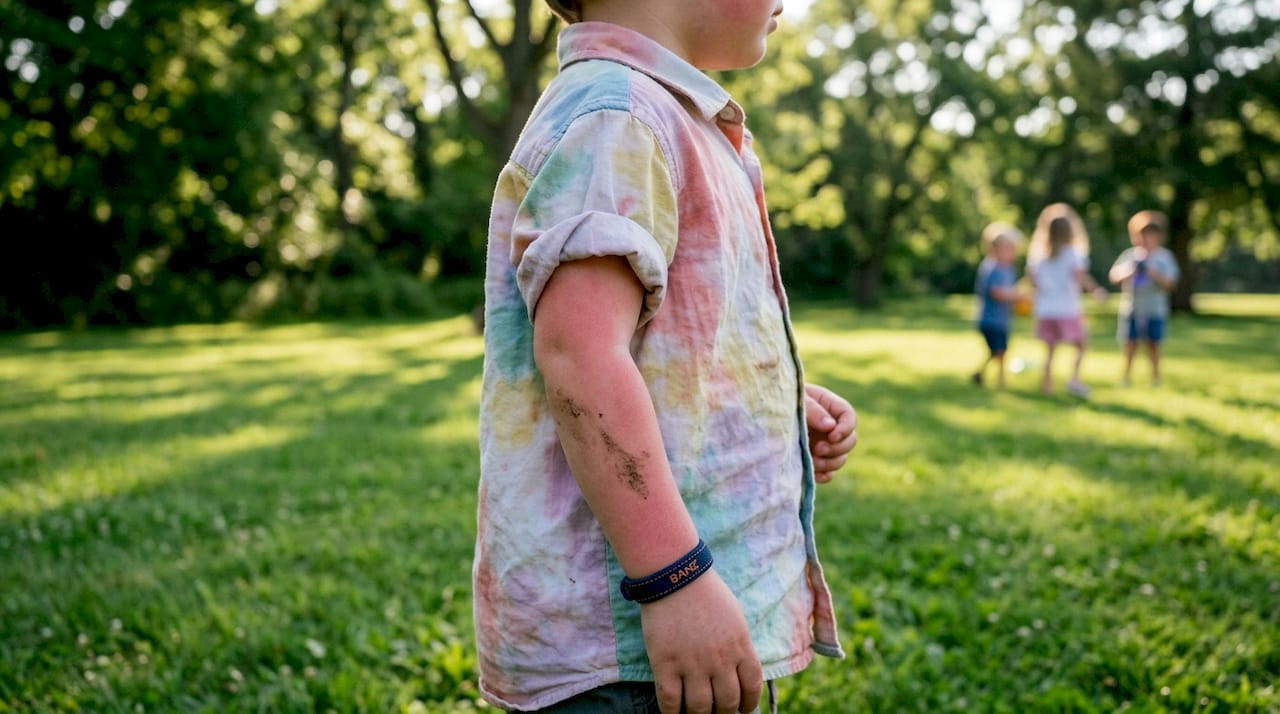
Freckling in children is not an innocent summer trait. It signals existing UV skin injury and indicates that protection measures need to be stricter, not relaxed. Parents who notice freckling appearing on a young child should treat it as a warning sign, not a cosmetic detail.
Children’s eyes face the same vulnerability. A child’s lens is clearer than an adult’s, which allows more UV radiation to reach the retina. Cumulative eye exposure in childhood contributes to cataracts and macular degeneration later in life. Sunglasses with UV protection are not optional accessories.
Pro Tip: Check your child’s sunglasses label for “UV400” or “100% UV protection.” Tinted lenses without UV blocking can actually increase damage by causing pupils to dilate and admit more radiation.
Key signs of UV skin damage in children
- Freckling: Appears after repeated UV exposure and signals DNA-level skin injury
- Sunburn: Redness, peeling, and blistering indicate acute UV damage to skin cells
- Tanning: Often seen as harmless, but tanning is the skin’s stress response to UV injury
- Dry or peeling skin: Repeated mild burns cause cumulative cellular damage even without obvious blistering
What are the evidence-based sun protection methods for kids?
Pediatric guidelines from the CDC and the American Academy of Pediatrics follow a clear hierarchy. Sunscreen is not the first line of defense. It is the third.
- Avoid peak UV hours. UV index is highest between 10 a.m. and 4 p.m. Schedule outdoor play in the morning or late afternoon whenever possible.
- Seek shade. Trees, canopies, and portable shade structures reduce direct UV exposure significantly. Note that shade alone does not eliminate risk from reflected UV.
- Use protective clothing. UPF-rated fabrics block UV rays more reliably than sunscreen because they do not wear off, wash away, or require reapplication. Wide-brim hats protect the face, ears, and neck. UV-blocking sunglasses protect the eyes.
- Apply sunscreen as a supplement. Broad-spectrum SPF 30+ is the minimum standard. SPF 30 blocks approximately 97% of UVB rays when applied correctly. Mineral-based formulas containing zinc oxide or titanium dioxide are preferred for children with sensitive skin.
- Time your application. Sunscreen needs 15–30 minutes to form a protective barrier. Applying it at the trailhead or poolside is too late for full effectiveness.
For infants under 6 months, the guidance is clear. Babies under 6 months should avoid direct sunlight entirely, relying on shade and protective clothing rather than sunscreen. Their skin absorbs chemicals more readily, and the safety data for sunscreen in that age group is limited.
Pro Tip: Apply sunscreen to children before they get dressed. It covers the hairline, ears, and back of the neck more thoroughly, and clothing going on afterward does not wipe it off.
What are common myths parents believe about UV protection?
The most dangerous myth is that darker-skinned children do not need sun protection. All skin tones sustain UV DNA damage, regardless of melanin level. Darker skin is less likely to show a visible burn, but the cellular damage still accumulates and still raises long-term cancer risk.
A second common mistake is treating sunscreen as a complete solution. Sunscreen applied without attention to timing, coverage, or reapplication provides far less protection than parents assume. Most parents miss the ears, the back of the neck, and the tops of the feet.
- Myth: Water-resistant sunscreen lasts all day. Water-resistant sunscreen requires reapplication after swimming, sweating, or towel drying. “Water-resistant” means it holds up for 40 or 80 minutes in water, not indefinitely.
- Myth: Cloudy days are safe. Up to 80% of UV radiation passes through cloud cover. Overcast conditions create a false sense of security.
- Myth: Shade provides complete protection. Reflected UV from water, sand, and concrete significantly increases exposure even in shaded areas. A child sitting under an umbrella at the beach still receives reflected UV from the surrounding surfaces.
- Myth: One application is enough. Sunscreen degrades with heat, sweat, and friction. Reapplication every 2 hours is not a suggestion. It is a requirement for maintained protection.
How can parents protect children during outdoor activities?
Practical protection combines timing, environment, clothing, and sunscreen into a daily habit rather than a special-occasion routine. The goal is layered defense, not a single product.
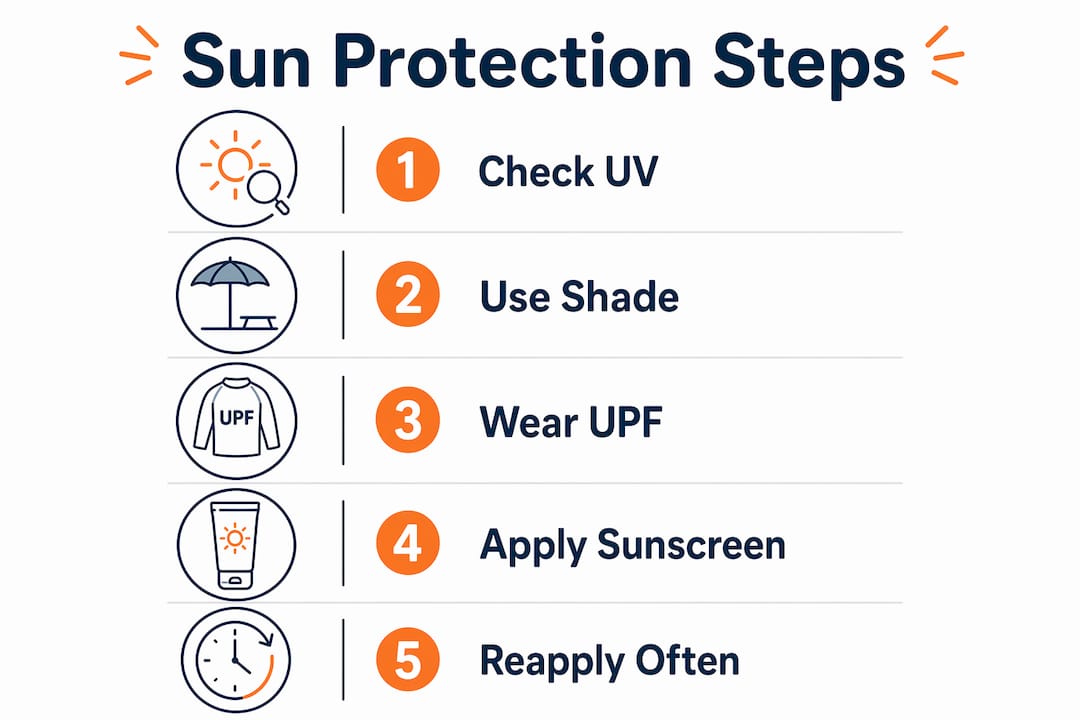
Planning and timing:
Check the UV index before heading outside. A UV index of 3 or above warrants protection measures. Most weather apps display this data. Schedule high-activity play before 10 a.m. or after 4 p.m. when UV levels drop significantly.
Clothing and accessories:
Dress children in UPF-rated sun protective clothing for extended outdoor time. Long sleeves and full-coverage swimwear provide consistent protection that sunscreen cannot match for active children in water. Wide-brim hats cover the face, ears, and neck, which are among the most commonly burned areas in children.
Environment choices:
Select shaded playgrounds and picnic areas when possible. Bring a portable canopy for beach or park outings. Understand that shade alone is insufficient when reflective surfaces are nearby.
| Age group | Sunscreen use | Primary protection |
|---|---|---|
| Under 6 months | Avoid sunscreen | Shade and protective clothing only |
| 6 months to 2 years | Mineral SPF 30+ on exposed skin | Shade, UPF clothing, wide-brim hat |
| 2 to 12 years | Broad-spectrum SPF 30+, reapply every 2 hours | UPF clothing, hat, UV sunglasses, shade |
| 12 years and older | Broad-spectrum SPF 30+, reapply every 2 hours | Full layered approach |
For infants and toddlers not yet suitable for sunscreen, sun protection layers using clothing and shade are the primary strategy. A well-fitted hat and a stroller canopy do more for a 3-month-old than any topical product.
Key Takeaways
Protecting children from UV radiation requires a layered strategy combining timing, shade, UPF clothing, and correctly applied sunscreen, because no single method provides complete defense.
| Point | Details |
|---|---|
| Childhood UV exposure is cumulative | 25% of lifetime UV exposure occurs before adulthood, making early habits critical. |
| Sunburn risk is long-term | Blistering sunburns in youth increase melanoma risk by up to 80% later in life. |
| Sunscreen is the third defense | Timing and shade come first; sunscreen supplements, not replaces, physical protection. |
| All skin tones need protection | Darker skin still sustains UV DNA damage even without visible burning. |
| Reapplication is non-negotiable | Water-resistant sunscreen must be reapplied every 2 hours or after water exposure. |
What I’ve learned after years of watching parents get this wrong
Parents consistently underestimate UV risk on ordinary days. The beach trips get sunscreen. The Tuesday afternoon playground visit does not. That gap is where cumulative damage builds.
The second pattern I see is over-reliance on sunscreen as a standalone solution. Parents apply it once, feel covered, and move on. They skip the hat because the child resists it. They skip the shade because the playground is sunny and the kids are happy. Sunscreen applied once at 9 a.m. provides minimal protection by noon.
What actually works is building UV protection into the routine the same way you build in car seat use. You do not debate it. You do not skip it when it is inconvenient. Wide-brim hats, UPF clothing, and timed outdoor play are habits, not products. Products support habits. They do not replace them.
The freckling point deserves more attention than it gets. Parents often celebrate freckles as cute. Pediatric dermatologists treat them as evidence of prior UV injury. If your child is freckling at age 4 or 5, the protection strategy needs to change now, not when they are teenagers.
— Shari M. Murphy
BANZ sun safety gear for outdoor-ready kids
Children’s UV protection works best when gear fits well and stays on. BANZ designs sun safety products specifically for children’s comfort and coverage, including UPF 50+ sun hats that protect the face, ears, and neck, and UV anti-fog swim goggles that shield eyes during water activities.
BANZ has protected over 2 million families across six continents since its founding in Australia. The free BANZ Protect app adds real-time UV monitoring so you know exactly when conditions require extra protection. For parents building a complete outdoor safety kit, BANZ offers infant and toddler swimwear sets with full UPF coverage for the youngest children who cannot yet use sunscreen.
FAQ
How much UV exposure do children get compared to adults?
Children accumulate 25% of their lifetime UV exposure before adulthood. That makes childhood the single most important window for establishing sun protection habits.
What SPF level is recommended for children’s sunscreen?
Broad-spectrum SPF 30 is the minimum recommended level. SPF 30 blocks approximately 97% of UVB rays when applied correctly and reapplied every 2 hours.
Can babies under 6 months use sunscreen?
No. Infants under 6 months should rely on shade and protective clothing rather than sunscreen. Their skin absorbs topical products more readily, and safety data for sunscreen in this age group is insufficient.
Do children with darker skin need sun protection?
Yes. All skin tones sustain UV DNA damage regardless of melanin level. Darker skin reduces visible burn risk but does not prevent the cellular damage that raises long-term skin cancer risk.
Does water-resistant sunscreen last all day?
No. Water-resistant sunscreen must be reapplied after swimming, sweating, or towel drying. “Water-resistant” refers to performance during 40 or 80 minutes of water exposure, not all-day coverage.
